TIP OF THE DAY: Try A Great Fruitcake…And The Right Drink To Pair With It
|
December 27th is National Fruitcake Day and December is National Fruitcake Month. The most maligned food in America is not cilantro. It is fruitcake.
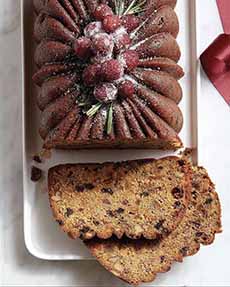
Unlike cilantro, which delivers a consistent take-it-or-leave-it flavor, regardless of where it is grown, it is producers who have manipulated cheap ingredients and preservatives into frightful fruitcakes. But yes, Virginia, there is great fruitcake—the kind that, 100 and 200 years ago, people had reason to celebrate—and not just at Christmas. It was the wedding cake of choice. Several weeks ago we received a simply superb fruitcake sold at Williams-Sonoma (and alas, now sold out). It was made by the fabulous Beekman Boys, a.k.a. Brent Ridge and Josh Kilmer-Purcell, of the website Beekman1802.com and the Planet Green reality series. Made with a century-old family recipe, there’s no candied citron, maraschino cherries, or unrecognizable, nuclear-colored fruits in the Beekman 1802 fruitcake. It’s made with dried fruits soaked in applejack brandy (apricots, dates, cherries, figs, pineapple, raisins), brown sugar, butter, eggs, and flour. Every ingredient is delicious and the cake is so lovely, we didn’t share a bite of it. The recipe isn’t in the Beekman 1802 Heirloom Cookbook, although said book has a smashing carrot cake and a lovely gingerbread with exotic spices. We did, however, find the fruitcake recipe on the Beekman 1802 website. So start soaking those dried fruits in applejack or rum. A magnificent fruitcake you can buy is from the food artisan Robert Lambert. It’s worth every penny. Before we proceed with fruitcake and beverage pairings: > The year’s 55 cake holidays. Below: > Beverage pairings with fruitcake. > Different ways to serve fruitcake. We love a good cup of black tea with our fruitcake, or a spice tea like Constant Comment (which is also available in a decaffeinated version and a green tea version). Port is the wine of choice, but other choices include: The earliest known recipe for the ancestor of fruitcake dates to ancient Rome was a mixed fruit and nut dish called satura. Combining pine nuts, pomegranate seeds, and raisins into barley mash, it was carried by Roman warriors to sustain them through their long marches. By medieval times, the concept had evolved from march to hearth. What became known as Christmas pudding was tied in cloth and then boiled for hours to create a spiced fruit bread. What we recognize as a modern-style baked fruitcake—a moist, leavened cake studded with fruits and nuts—likely first appeared in the early Middle Ages in Europe. Recipes varied widely by regions and their available ingredients. Honey, more preserved fruits, and spices had been added to create an early fruitcake. Plum Pudding Plum pudding (or Christmas pudding) is a rich, steamed fruitcake, with these differences: It uses suet, is cooked by boiling or steaming (not baking), and historically the “plums” were dried fruits like raisins and prunes. It was denser, darker, and moister than typical baked fruitcakes. Also known as figgy pudding, it was celebrated in the Christmas carol “We Wish You a Merry Christmas” and in the nursery rhyme “Little Jack Horner,” and by Charles Dickens in “A Christmas Carol.” Fruitcake: The Christmas Cake During the 16th century, eggs, butter, and flour were added to create a cake that had better structure: the Christmas cake. Sugar imported from recently-established Caribbean plantations became more affordable than that imported from India and Southeast Asia. (It also was a great way to preserve fruits.) Fruitcake was still a luxury, containing imported spices and dried fruits, sugar replacing honey, and much labor. Although the bourgeoisie were able to afford it. According to the Oxford Companion to Food by Alan Davidson: Making a rich fruit cake in the 18th century was a major undertaking. The ingredients had to be carefully prepared. Fruit was washed, dried, and stoned [taking the pits out] if necessary; sugar, cut from loaves, had to be pounded and sieved; butter washed in water and rinsed in rosewater. Eggs were beaten for a long time, half an hour being commonly directed. Yeast, or barm from fermenting beer, had to be coaxed to life. Finally, the cook had to cope with the temperamental wood-fired baking ovens of that time. No wonder these cakes acquired such mystique… |
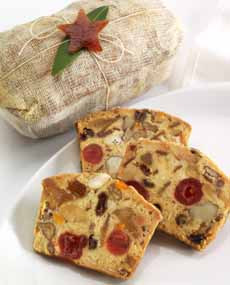
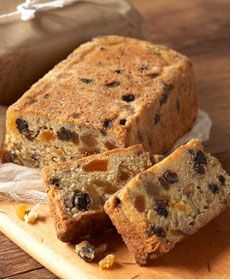 [1] A luscious classic light fruitcake from Beekman 1802. Light fruitcake uses white sugar or/corn syrup, lighter fruits (golden raisins, pineapple, apricots), and less spice, with rum or rum extract. This results in a sweeter, lighter, and more cake-like texture (photo © Williams-Sonoma).
|
|
|
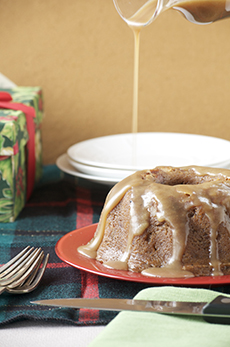
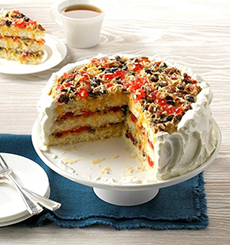
The cake is was served throughout the 12 days of Christmas, December 25th through until January 5th. The night of January 5th, the Twelfth Night, celebrates the Three Kings arriving in Bethlehem. It was common for the fruitcake to be served as part of the night’s feast, as well as on the following day, January 6th, Epiphany. Public Christmas Celebrations Were Banned For 13 Years! When Oliver Cromwell came to power in 1647, he banned Christmas celebrations and the public consumption of rich holiday foods as Catholic, wasteful, and promoting immorality/idleness. Parliament banned Christmas, Easter, and Whitsun celebrations, making them normal working days. People still celebrated and baked fruitcake privately, just not as part of official Christmas feasting. Fruitcake itself wasn’t illegal; it was the celebration that was banned. Yule logs, carol-singing and nativity scenes were part of the ban. In addition to Christmas at home, fruitcake continued to be baked for weddings and other celebrations during the ban. When Charles II restored the monarchy in 1660, Christmas fruitcake and other holiday practices immediately returned to prominence as part of the renewed holiday celebrations. By the end of the 17th century in Britain, the Twelfth Night feast had become “the event of the year,” with much reveling. Large numbers of people became rowdy and inebriated in public. Around 1870, Queen Victoria took action against the public Twelfth Night raucous gatherings, calling them “unchristian.” She removed the traditional Twelfth Night festivities from the annual calendar. The religious celebration, and the fruitcake tradition, survived at home. Fruitcake recipes evolved and were enjoyed thoroughly during the Christmas season. But the mass production of prepared foods that followed World War II led to low-priced fruitcakes made without top-quality ingredients, and they were not good. Following tradition, people gave them as Christmas gifts—they were affordable and festive-looking in tins—but few recipients enjoyed eating them. Many of them regifted their fruitcakes, prompting comedian Johnny Carson to joke that there was only one fruitcake in the world and it got passed from person to person. Of course, good family recipes endured, and by the late 20th century, artisan bakers re-introduced fine fruitcakes to the public. Those who tasted them finally understood the joy of fruitcake. So buy or bake a really good fruitcake and see why it deserves its place among delicious Christmas foods. Fruitcake is delicious with coffee, tea, or milk—cold or hot with a shake of nutmeg. Here are ways to enhance that plain slice of fruitcake. You can garnish it with a dollop of whipped cream, or serve it à la mode with vanilla or eggnog ice cream. And there’s more! Turn the fruitcake into something else! These options are especially useful for dry, overly dense fruitcake. The key is to adding moisture (cream, custard, spirits, or other ingredients). CHECK OUT WHAT’S HAPPENING ON OUR HOME PAGE, THENIBBLE.COM. |
||