THE NIBBLE BLOG: Products, Recipes & Trends In Specialty Foods


Also visit our main website, TheNibble.com.

TIP OF THE DAY: Apple Cider Sangria Recipe

Fall means apple cider, a drink that’s refreshing served cold or hot (mulled cider).

Here’s a festive drink that adds wine, to make it a sangria.

Here’s how to set up an apple cider bar for a party.

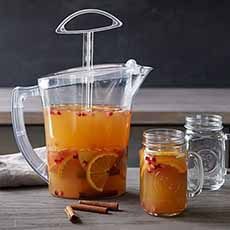
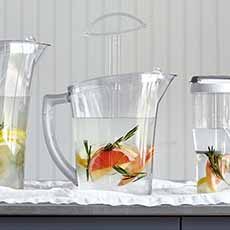
If you need a pitcher, take a look at Pampered Chef’s Quick-Stir Pitcher. It has a plunger feature, to make it easy to mix powdered drinks, and can be used to serve hot or cold drinks. Bonus: The sleek design fits into your refrigerator door. Here’s more about it.

You can also serve the sangria from a punch bowl.

This drink is made with what Americans call apple cider, but in Europe, apple cider is an alcoholic drink.

  • Hard cider is a fermented alcoholic beverage made from the unfiltered juice of apples. The alcohol content varies from a low 1.2% ABV* to 8.5% or higher—some imported ciders can be up to 12% ABV, an average level for table wines.
  • Fresh apple cider is raw apple juice, typically unfiltered. Thus, it is cloudy from the remnants of apple pulp. It is also typically more flavorful than apple juice—although of course, the particular blend of apples used in either has a big impact on the taste. It is pasteurized in order to be sold off the shelf.
  • Apple juice has been filtered to remove pulp solids, then pasteurized for longer shelf life.
  •  
     
    RECIPE: APPLE CIDER SANGRIA

    Thanks to Pampered Chef for the recipe.

    For a non-alcoholic version, substitute 3 cups (750 mL) lemon or orange sparkling water for the wine.

    Ingredients For 8 Servings

  • 4 cinnamon sticks
  • 3 cups (750 mL) chilled fresh apple cider, divided
  • 1 tbsp (15 mL) honey
  • 1 medium green or red apple, cored
  • 1 large navel orange
  • 1/4 cup (50 mL) fresh pomegranate seeds
  • 1 bottle (750 mL) chilled white wine, such as Pinot Grigio
  •  
    Preparation

    1. PLACE the cinnamon sticks, 1 cup of the apple cider and the honey in 2-cup prep bowl. Microwave, uncovered, on HIGH 2 minutes. Carefully remove the bowl from the microwave.

    2. POUR the cinnamon sticks and cider into a pitcher. Place in the refrigerator until ready to combine.

    3. CUT the apple and orange in half lengthwise, and then into slices. Add all of the fruit, the remaining apple cider and and wine into the pitcher; stir.

    4. PLACE the lid on the pitcher, or cover with plastic wrap. Chill for several hours or overnight.

    5. TO SERVE: Pour the sangria into glasses with ice. Top with some of the fruit, if desired.

    Nutrients per 8-ounce serving: Calories 140, Total Fat 0 g, Saturated Fat 0 g, Cholesterol 0 mg, Sodium 0 mg, Carbohydrate 21 g, Fiber 1 g, Sugars 6 g, Protein 0 g.
     
     
    SANGRIA HISTORY
     
     
    APPLE HISTORY
     
     
    APPLE CIDER HISTORY


    [1] Apple cider sangria combines seasonal flavors with wine.


    [2] (both photos © Pampered Chef).


    [3] Apple cider, mixed with ginger beer and infused with vanilla bean and fresh mint. Here’s the recipe.

    Apple Juice Sangria Recipe
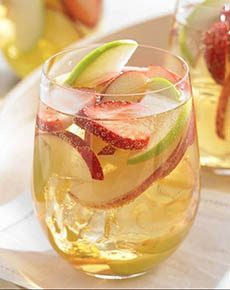
    [4] Apple juice sangria, made with clear apple juice instead of unfiltered apple cider (photos #3 and #4 © USA Apples).

     
    Wild apple trees originated in the mountains of Central Asia. The center of diversity of the genus became eastern [present-day] Turkey.

    The apple tree may have been the earliest tree that humans cultivated. Over the millennia, through selective breeding, farmers improved the fruits [source].

    When the Romans invaded England around 55 B.C.E., they found the locals cultivating apple orchards and drinking apple cider.

    The original apple varieties weren’t for eating. They were bitter, so were pressed for their juice and left to ferment into alcohol.

    The Romans immediately embraced the drink, and cider quickly spread through the Roman Empire and across Europe: from the Germanic tribes to the east, to the Normans in the south (northern France).

    When the Normans invaded England in the 9th century, they returned to Normandy with the rootstock to grow their own apple orchards and left behind the word “cider” for the English language [source].

    Everyone drank cider or beer: adults and children alike. Due to unhealthy water sources, it was the safer choice.

    Fast forward: Colonists brought apples to North America in the 17th century—the bitter cider apples. Apples were being grown in Massachusetts as early as 1630. At the end of the 18th century, Johnny Appleseed traveled west to spread apple trees for cider.

    As in Europe, cider or beer was drunk instead of water.

    Mutation was continually creating new breeds of apples. The McIntosh mutation was discovered in 1796, by a farmer named John McIntosh. It was sweeter, and was best for eating rather than fermenting.

    More sweet mutations followed, and today, we have as many varieties of sweet apples as cider apples.


    CHECK OUT WHAT’S HAPPENING ON OUR HOME PAGE, THENIBBLE.COM.


    Comments off

    TOP PICK OF THE WEEK: Summer Is Inside Canned Tomatoes


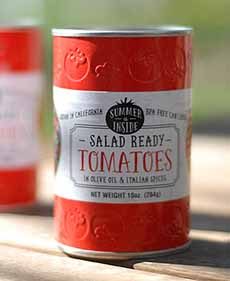
    [1] The inviting package design © Jamie Stark | Stark Designs).


    [2] Here’s the recipe from Here’s a most delicious French bread pizza recipe from Nicole of Cooking For Keeps (photo © Cooking For Keeps).


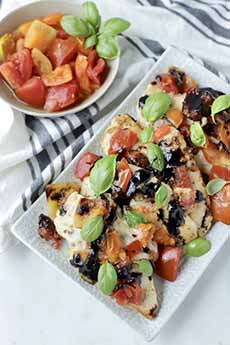
    [3] Caprese Chicken Skillet. Here’s the recipe from Rachel’s Healthy Plate (photo © Rachel’s Healthy Plate).


    [4] Gourmet grilled cheese sandwich on brown bread with cheddar, feta, arugula, red onion and tomatoes (photo © Wisconsin Cheese).
     
     
    >>>CHECK OUT<<<
    THE HISTORY OF TOMATOES


    Vine-ripened tomatoes are one of the treats of the summer table.

    That’s why this is a sorrowful time of year: The days are getting shorter, and there are no more summer tomatoes.

    But we have a solution for people who want to enjoy great tomato flavor during the off seasons: the Summer Is Inside brand of canned tomatoes (photo #1).

    Canned tomatoes, you say?

    Yes! Summer Is Inside tomatoes are standing by to brighten your meals all year long.

    Grown in California by family farmers, the tomatoes go from field to can in five hours. The process locks in all the flavor, freshness and nutrition.

    Unlike other canned tomato products, Summer On The Inside tomatoes have a firm texture that works well in many recipes.

    The Salad Ready Tomato Wedges are available in two varieties, classic red and tri-color. The tri-color variety features red, orange and yellow tomatoes.

    Each variety is marinated in olive oil and an Italian spices blend: garlic powder, onion powder, other spices, vinegar, sugar and salt.

    Even though the tomatoes are in oil and vinegar and Italian spices, the seasonings do not overpower the fresh, seasonal inherent tomato flavor. (They do, however, make them delicious to eat straight from the can.)

    Without doubt, Summer On The Inside is a superior solution to most canned tomato brands, and to the bland, mealy, produce department tomatoes that are picked green, turned red with ethylene gas, and sold hard.
     
     
    HOW WE USE SUMMER ON THE INSIDE CANNED TOMATOES

    The tomatoes are ready-to-eat. If you’re going to drain the liquid (e.g. for these uses), save it to use as a dressing, or a flavoring to other dishes (soups, stews, etc.)

    We’ve even added some vodka to the liquid for a Bloody Mary “Light.” But for more substantial cuisine, we use them in/on/as:

  • Caprese salad
  • Garnishes
  • Grilled cheese and other sandwiches (photo #2 and #4)
  • Green salad
  • Panzanella
  • Raw tomato substitute
  • Tomato tartlets
  •  
    There are more uses below.
     
     
    FINDING SUMMER ON THE INSIDE CANNED TOMATOES

    You can find Summer Is Inside with the label as shown in photo #1, in the canned tomato section of your grocery store. The brand name is inside the black tomato in the white band.

    But the manufacturer, Pacific Coast Producers, also private-labels its canned tomatoes to numerous retailers.

    For example, at Walmart, you’ll find the embossed can in red stripes with a white center, with the store’s Great Value brand replacing Summer On The Inside.

    The red and white color bands, with the embossed tomatoes in the red bands, will clue you in.
     
     
    USES FOR CANNED TOMATOES

    We typically use imported San Marzano or domestic San Marzano-style canned tomatoes. Summer On The Inside is just as good, and even better on green salads.

    For many of these recipes, you can simply open the can and put the tomatoes to work.

    But you can also drain them and roast them in the oven until they’re caramelized. Then, serve them with grilled cheese, on any cheese sandwich on toast, or as a vegetable side.

    More ways we used canned tomatoes:

  • Chili and Sloppy Joes
  • Braises
  • Mac and cheese (one of our favorite uses—just drain and mix in before cooking)
  • Pasta salad
  • Pasta sauce
  • Salsa
  • Shakshuka or a side with eggs
  • Simmer sauce (chicken, fish, grains, meatballs, etc.)
  • Skillet dishes (photo #3)
  • Tomato soup
  •  


    Comments off

    FOOD 101: For National Vodka Day, The History Of The World’s #1 Spirit

    October 4th is National Vodka Day.

    Vodka was once rarely consumed outside of Europe. Today, it’s the world’s top-selling spirit.

    Its popularity is owed in part to its versatility, as well as to its numerous appearances in pop culture—from James Bond’s “shaken not stirred” Vodka Martini to Carrie Bradshaw’s Cosmopolitan.

    Vodka, which has a neutral flavor, blends well with many other flavors, making it a perfect choice for seasonal, nouvelle and experimental concoctions—which resulted in practically-standard choices like the Chocolate Basil Martini and Green Tea Martini.
     
     
    CREATING VODKA

    Vodka is a clear liquor, mostly made from water and ethanol distilled from a fermented substance, such as grapes, potatoes or wheat.

    Both Russia and Poland claim to be the originators of vodka. The first identifiable Polish vodkas appeared in the 11th century and were used as medicines—as were most spirits.

    The first documented distillery was recorded in the Russian town of Khylnovsk in 1174. Commercial production was established by the 14th century. The first recorded exports of Russian vodka (to Sweden) were documented in 1505. Early vodka was distilled only once.

    However, vodka makers soon caught on to the benefits of multiple distillations, which produce higher alcohol content and greater quality, by removing impurities.

    Since early production methods were crude, fruit, herbs or spices were used to mask the imperfections. (TRIVIA: In Russia, the air bladders of fish were once used to remove impurities and improve taste after distillation.)

    In the 18th century, a professor in St. Petersburg discovered the method of purifying alcohol using charcoal filtration, and this process is still widely used today.

    Owning distilleries became the exclusive right of the Russian nobility in 1716. In 1894, in an attempt to control vodka quality, a law was enacted to make the production and distribution of Russian vodka a state monopoly.

    By contrast, making vodka in Poland was easy: In 1546, the King of Poland issued a decree extending the right to make vodka to every citizen.
     
     
    VODKA HEADS TO AMERICA

    Vodka reached other parts of Europe by the 19th century, but it took another century to cross the pond. It came to the U.S. by way of France after World War II.

    While vodka is usually part of a Martini, the Martini, which dates to the 19th century, was originally made with gin and vermouth (the history of the Martini). Vodka was largely unknown by most drinkers of spirits.

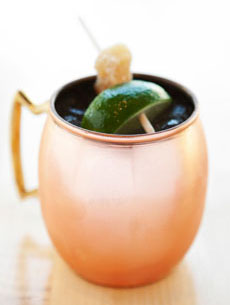
    Vodka sales did not take off in the U.S. until the 1950s, when a business-savvy food and spirits distributor introduced the Moscow Mule (made with vodka, lime juice and ginger beer). The Mule kicked off a vodka craze.

    The first notation of a Vodka Martini is found in a 1951 cocktail recipe book. But still, interest in vodka was moderate at best.

    In the 1960s, vodka got a second boost from a man named Bond, James Bond.

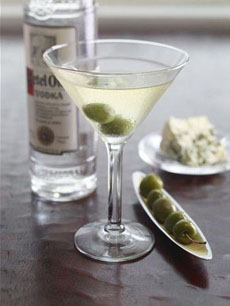
    Agent 007’s “Vodka Martini, shaken not stirred” catapulted this now-classic cocktail to instant stardom (photo #1).

    But note: Many people still enjoy the classic Gin Martini: The botanicals in gin add more flavor to the drink. A Gin Martini with cocktail onions is called a Gibson (photo #2). Vodka Gibsons are also made.

    Poland and Russia have a centuries-old tradition of making flavored vodkas, infusing the neutral alcohol with numerous botanicals: blackberries, bison grass, dill, coriander, caraway seeds, horseradish, roots and other flavors, including imported spices like caraway, ginger and peppercorns [source].

    But no one could have been prepared for the explosion in flavored vodkas in the late 1980s, led by Absolut, which introduced Absolut Citron to the U.S. in 1988.

    It was followed by Absolut Mandarin, Peppar and Vanilia, and now includes flavors from Mango to Raspberri.

    Other vodka distillers followed suit, and led to almost every imaginable infusion. Chile vodka and cucumber vodka enhanced the Martini nicely, while other cocktails—Apple Martinis, Flirtinis (vodka, Champagne and pineapple juice), Chocolate Martinis—stretched the meaning of “Martini.”


    [1] A Vodka Martini with the classic popular Martini garnish, olives (photo © Ruth’s Chris Steak House).


    [2] Substitute cocktail onions for the olives, and you’ve got a Vodka Gibson (photo © iStock Photo).


    [3] The Moscow Mule was invented in the 1950s to spur vodka sales in the U.S. (photo © Arch Rock Fish | Santa Barbara (now closed).


    [4] The Cosmopolitan cocktail. Here’s the recipe (photo © Inspired By Charm).

     
    Vodka martini madness swept across the U.S. Some “martini bars” boasted hundreds different of martini cocktails.

    Vodka cocktails took center stage again when Carrie Bradshaw and her “Sex and the City” crew began sipping Cosmopolitans (photo #4): four parts citron vodka, two parts Cointreau or triple sec, two parts cranberry juice and one part fresh lime juice when the television series, debuted in 1998.

    Today, vodka accounts for more than one out of every four bottles of distilled spirits consumed in the U.S.

    America loves its vodka: Super-premium (high-quality, handcrafted) is now the fastest growing vodka segment in the U.S. and now constitutes nearly 40% of total vodka sales.

    Bottoms up!


    Comments off


    © Copyright 2005-2026 Lifestyle Direct, Inc. All rights reserved. All images are copyrighted to their respective owners.