RECIPE: Almond Pancakes Plus What Is Marzipan
|
|
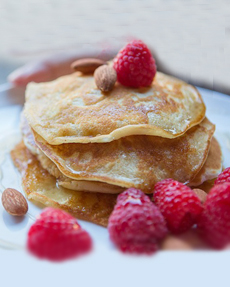
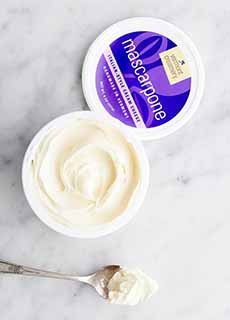
Does Mom like marzipan? Whip up some of Giada De Laurentiis’ mouth-watering almond pancakes for Mother’s Day. There’s no marzipan in the recipe, but the almond extract evokes the flavor. And you can garnish the stack with a small piece of marzipan. Light and fluffy, sweet and nutty, this is a stack for special celebrations. The recipe comes from Target’s website, A Bulls Eye View. You can see step-by-step photos here. January 12th is National Marzipan Day and September 26th is National Pancake Day. > The different types of pancakes, a photo glossary. > The year’s 7 pancake holidays. Below: > The year’s 8+ almond holidays. Ingredients For 16 Pancakes 1. COMBINE the mascarpone, water, sugar, almond extract, and vanilla extract in a food processor. Process until mixture is smooth. 2. ADD the pancake mix and pulse until just combined. Add the almond paste and pulse once to incorporate. 3. PREHEAT a griddle or large, non-stick skillet over medium-low heat. Grease the griddle or skillet with 1 tablespoon of butter. 4. WORKING in batches, pour ¼ cup of batter per pancake onto the griddle. Cook for about 1½ minutes on each side, or until golden. Repeat with remaining butter and batter. 5. ARRANGE pancakes on a platter. Serve with maple syrup and fresh raspberries. A paste of sugar and ground almonds, marzipan originated in Asia some 1,000 years ago. It is believed to have reached Europe via Spain, brought by Arab traders. Marzipan grew quickly in popularity with royalty and the wealthy. It was only at the beginning of the 19th century that sugar became affordable and many more people could enjoy marzipan (as well as other sweet treats). Marzipan is used as a pastry filling and was traditionally popular in wedding cakes as a layer on top of the cake and under the fondant. |
|
|
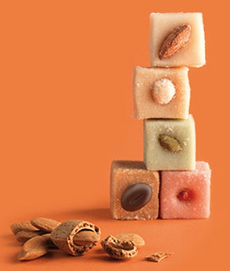
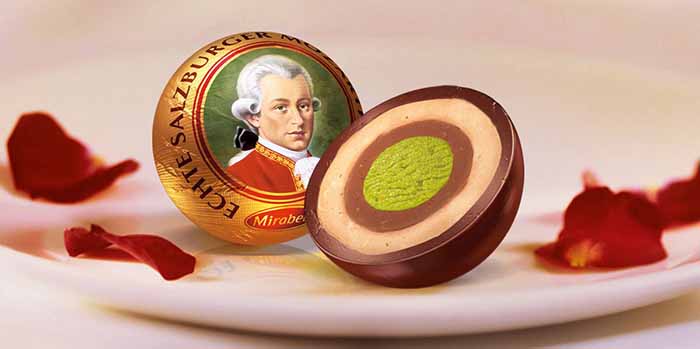
Marzipan is sweeter than almond paste, which is another ground almond sugar product: It has more sugar and can be eaten directly as a confection, while almond paste cannot be eaten directly but is used as an ingredient, mixed with sugar. Marzipan is also molded and tinted to resemble fruits, animals, and other fanciful shapes. Marzipan is not just an almond confection: Pistachio marzipan is another popular form, most often used to fill chocolates†. The origin of marzipan is disputed. One camp says that the sweet is believed to have originated in Persia (present-day Iran) and was introduced to Europe through the Turks. We know that marzipan became a specialty of the Baltic Sea region of Germany. In particular, the city of Lübeck, Germany, claims that marzipan was created there in the 15th century. Their story is that during a famine when flour for making bread became scarce, the senate of the city of Lübeck ordered bakers to create a replacement. Using eggs, sugar, and ground almonds instead of wheat flour, the bakers created marzipan. Lübecker marzipan manufacturers like Niederegger still guarantee their Marzipan to contain two-thirds almonds by weight. The Book of One Thousand and One Nights, a collection of tales that began in the early 8th century (and was added to up through the 13th century), tells of an almond paste eaten during Ramadan and also as an aphrodisiac [source]. Other sources establish the origin of marzipan in China, from whence the recipe traveled to the Middle East and then to Europe through Andalusia [source]. Truth to tell, we may never know the origin. However, it is not difficult to believe that marzipan originated in different places. Anyone with almonds or pistachios to grind and blend with sugar or honey could have created it, subsequently adding egg whites to create a better texture. Subsequently, they’d have discovered that marzipan holds a shape easily, and can be molded into specially-shaped confections. The next discovery may have been that marzipan keeps cakes fresher longer. Like fondant, it can substitute for icing on wedding cakes, fruitcakes, and others, where it seals in moisture. With elaborate cakes, this allows the baked layers to remain soft while the decorations are applied, which can take days. Both almond paste and marzipan are made from almonds, sugar, and egg whites. But almond paste has twice the amount of almonds in it compared to marzipan, and less sugar. In European and American cooking, both are exclusively used in sweet applications. 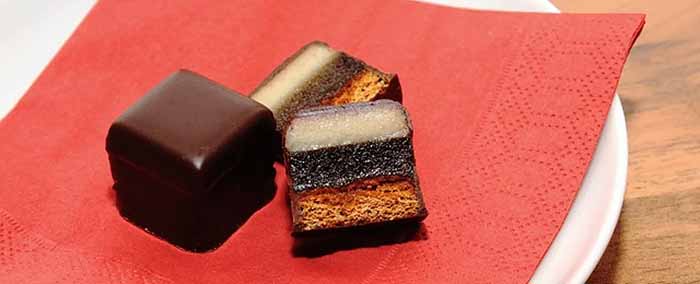 [6] Dominosteine (domino stones†) are German holiday specialty: a bottom layer of gingerbread (Lebkuchen), a middle layer of sour cherry jelly, and a top layer of marzipan, enrobed in dark chocolate (photo © ). ________________ *These famous marzipan candies are not almond marzipan. While marzipan traditionally and most commonly refers to an almond-sugar paste, the term can also describe the technique of making any nut-sugar paste. Pistachio marzipan is prepared in the same way as traditional almond marzipan, just with a different nut. You’ll also find other nuts, like hazelnut marzipan and walnut marzipan, in European confectionery traditions. The green color of pistachio marzipan is made with food color. Pistachio nuts are beige. At some point around the 19th century, likely in Italy, confectioners began to color pistachio-flavored sweets—gelato, macarons, marzipan, etc.—green, likely so they could be distinguished from other beige-colored flavors (some artisans simply leave the natural beige color). †Why are these soft sweets called steine, German for stones? It’s a German convention for certain types of small, block-shaped confections—it does’t mean they’re hard like stones. CHECK OUT WHAT’S HAPPENING ON OUR HOME PAGE, THENIBBLE.COM. |
||