It’s International Cocktail Day, and you know what that means: Happy Hour!
We list the top 10 whiskey cocktails below. Try one that you haven’t had before.
Below:
> The 10 top whiskey cocktails, ingredients, plus links to the history of each.
> Up, down, neat, on the rocks: how your drink is served.
Elsewhere on The Nibble:
> A brief history of whiskey, styles of whiskey, and why it’s spelled whiskey or whisky.
> The history of cocktails.
> The history of Happy Hour.
> Whiskey Glossary: terms and definitions for Bourbon, Scotch, Irish Whiskey, and more.
> The year’s 25+ whiskey holidays.
THE TOP 10 WHISKEY COCKTAILS
While “top” lists can be subjective, these ten are widely considered to be the classic cocktails that every whiskey lover should try.
If you’re new to cocktails, some terminology:
“Up” = chilled in a shaker, strained into stemmed glass. The term used to be “straight up,” but this term now has a different meaning. See the section below.
“Neat” = room temperature, no ice, in a rocks glass.
“On the Rocks” = chilled in a shaker with ice, strained over ice.
Rocks glass = lowball glass or Old Fashioned glass.
Expressed = the technique of twisting a citrus peel (lemon, orange, grapefruit) over a drink to release its aromatic oils onto the surface.*
Highball glass = tall glass with a volume of 8–12 ounces. It’s used for a Bloody Mary, Gin & Tonic, Dark ‘n’ Stormy, Paloma, Rum & Coke, and Whiskey Soda.
Collins glass = a tall glass of 10–14 ounces in volume. Taller and narrower than a highball glass, it’s used for a Tom Collins, of course, and also a Gin Fizz, Harvey Wallbanger, Long Island Iced Tea, Mojito, and Spiked Arnold Palmer.
Here’s a discussion of the difference between the two glasses.
And now, the cocktails.
If some of these cocktails are new to you—as they were to us—it’s because your “cocktail culture” days ended with the new millennium. The others have been around since the 19th and 20th centuries.
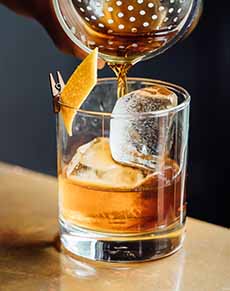
Old Fashioned. It’s the “original” cocktail, dating back to the early 19th century. Ingredients: Bourbon or Rye, sugar or simple syrup, Angostura bitters. Garnish: orange peel.
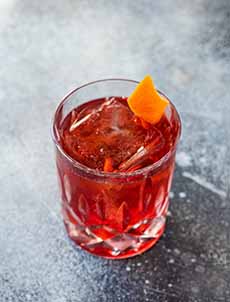
Served: in a chilled rocks glass (a.k.a. an Old Fashioned glass, photo #1).
> Old Fashioned cocktail history.
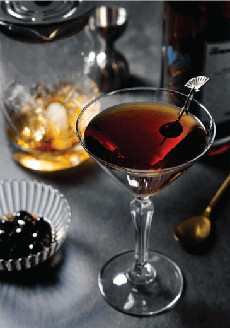
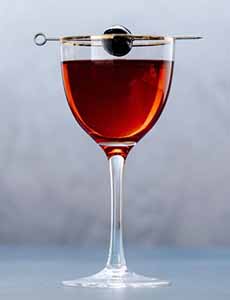
Manhattan. The sophisticated cousin of the Old Fashioned. Ingredients: Rye whiskey (which has a spicier flavor profile to stand up to the sweetness of the vermouth, red vermouth, and Angostura bitters. Garnish: a Maraschino cherry.
Served: straight up in a coupe or Martini glass, or on the rocks in a rocks glass (photo #2).
> Manhattan cocktail history.
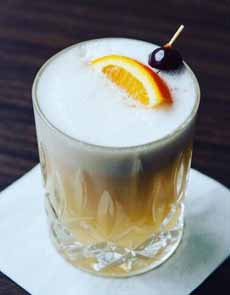
Whiskey Sour. A balance of bite, tart, and sweet. Traditional versions include an egg white for a silky, frothy texture. Ingredients: Bourbon, fresh lemon juice, simple syrup, and optional egg white. Garnish: a maraschino cherry and/or a slice of orange, sometimes speared together as a “cherry flag.
Served: in a rocks glass over ice or a chilled coupe glass (photo #3).
> Whiskey Sour Cocktail History.
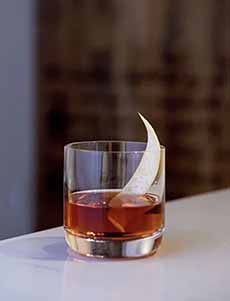
Sazerac. The official cocktail of New Orleans, and one of the oldest cocktails in America, it’s famous for its complex layers of anise and spice. Ingredients: Rye whiskey (some recipes substitute Cognac), Peychaud’s bitters, a sugar cube, and an Absinthe rinse in the glass. Garnish: a lemon peel or twist is expressed over the drink to release its oils and then often discarded.
Served: straight up in an absinthe-rinsed, chilled rocks glass (photo #4).
> Sazerac cocktail history.
Mint Julep. The official drink of the Kentucky Derby. Ingredients: Bourbon, muddled fresh mint leaves, sugar or simple syrup. Often made with high-proof bourbon to counter the rapid dilution from the crushed ice. Garnish: mint leaves.
Served: in a silver or pewter mug over a mound of crushed ice to keep it extra cold (photo #5).
> Mint Julep cocktail history.
Boulevardier. Essentially a Negroni made with whiskey instead of gin. Ingredients: Bourbon or Rye, Campari, and sweet red vermouth. The richness of Bourbon creates a heavier, warmer drink, compared to the botanical crispness of gin. Garnish: orange twist or peel, often expressed over the drink.
Served: stirred, not shaken, either straight up in a chilled coupe glass or on the rocks in a rocks glass, frequently over a single large ice cube (photo #6).
> Boulevardier cocktail history.
Penicillin. A modern classic (created in 2005) that has a “medicinal” but delicious flavor profile. Ingredients: Blended Scotch, honey-ginger syrup, fresh lemon juice, and a float of smoky Islay Scotch on top. Garnish: candied ginger or crystallized ginger on a pick.
Served: in rocks glass over ice (photo #9, below).
> Penicillin cocktail history.
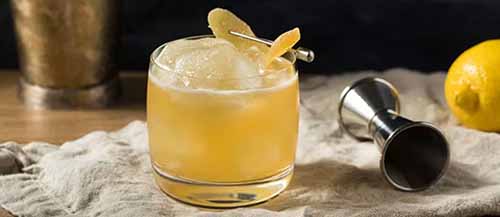
[9] Penicillin cocktail (photo © Diageo Bar Academy).
Rob Roy. The Scotch version of a Manhattan. Using Scotch instead of Rye or Bourbon produces a maltier, sometimes peatier profile. Ingredients: Scotch whiskey, sweet red vermouth, and Angostura bitters. Garnish: one or two maraschino or brandied cherries.
Served: stirred, not shaken, straight up in a coupe or Martini glass (photo #8).
> Rob Roy cocktail history.
Irish Coffee. The most famous hot cocktail. Ingredients: Irish whiskey, hot coffee, brown sugar, and a layer of unsweetened, hand-whipped heavy cream. Garnish: freshly-grated nutmeg.
Served: in a pre-warmed, stemmed (often tulip-shaped), heatproof glass (photo #7).
> Irish Coffee cocktail history.
|
|

[1] Old Fashioned cocktail (photo © Adam Jaime | Unspash).
[2] Manhattan cocktail (photo © Tommy Bahama).
[3] Whiskey Sour cocktail (photo © The Mercury Atlanta).
[4] Sazerac cocktail (photo © Old Forester.
[5] Mint Julep (photo © Ruth’s Chris Steak House).
[6] Boulevardier cocktail (photo © Kitchen Swagger).
[7] Irish Coffee cocktail (photo © Libbey).
[8] Rob Roy cocktail (photo © Tim Nusog | Food & |Wine).
|
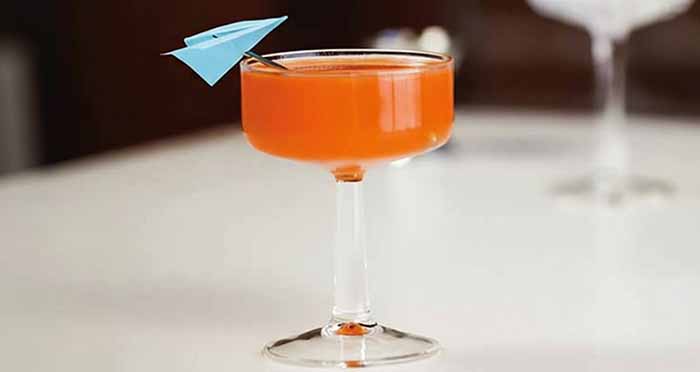
Paper Plane. A modern classic (created in 2008) that’s an “equal parts” drink, easy to remember and very balanced. Ingredients: Bourbon, Aperol, Amaro Nonino, and fresh lemon juice. Garnish: lemon twist or a small paper airplane.
Served: shaken and served “up” (chilled without ice) in a coupe or cocktail glass.
> Paper Plane cocktail history.
[10] Paper Plane cocktail (photo © Liquor.com).
THE DIFFERENCE BETWEEN “UP” AND “STRAIGHT UP
In our student bartending days, a drink strained into a glass with no ice was called “straight up.” The term is still used, but its meaning has become a major source of confusion and debate in the bar world.
In modern mixology, the terms have diverged to mean two different things, and modern bartenders have shifted toward, “up” in order to be more precise and avoid mistakes.
Here’s why the terminology has shifted.
The “Up” vs. “Straight Up” Confusion
Up means that the drink is shaken or stirred with ice to chill it, then strained into a glass (usually a coupe or Martini glass) and served without ice.
Straight usually means a spirit served at room temperature, poured directly from the bottle into a glass with no ice and no mixing (essentially, “neat”).
Because “straight up” combines both words, it creates a linguistic problem. If a customer orders a “Bourbon, straight up,” one bartender might hear “up” (chilled and strained) while another might hear “straight” (room temperature and neat).
To avoid serving the wrong drink, many professionals have dropped “straight” and now use only “up.”
2. The “Neat” Factor
The rise of the word “neat” has also pushed “straight up” out of favor. In the past, “straight” and “neat” were often used interchangeably. Today, “neat” is the term to order a room-temperature spirit.
By using “up”” for chilled/strained and “neat” for room-temp/unmixed, the term “straight up” became a middle ground that caused more problems than it solved.
3. Regional and Generational Differences
Yet, the term “straight up” is still very much alive in casual bars, older establishments, and pop culture. If you walk into a neighborhood tavern and order a “Martini, straight up,” the bartender will almost certainly know you want it chilled and strained into a stemmed glass.
However, in high-end craft cocktail bars, you will almost exclusively hear “up.” Bartenders there are trained to use “up” to distinguish it from “down” (a chilled drink served in a rocks glass without ice, like a Sazerac).
While “straight up” isn’t wrong, it has become a bit of an old school phrase that modern bartenders are slowly phasing out in favor of the more clear “up.”
4. The “Straight” vs. “Up” Rules of Thumb
If you want to ensure you get exactly what you want regardless of the bar, use:
“Up” = chilled, no ice, stemmed glass. When you order a drink “up,” the bartender will serve it in a stemmed glass. The “up” refers to the drink being elevated away from the table and your hand.
Examples: A classic Martini, Manhattan, or Sidecar. Glassware: Martini glass, coupe, or Nick & Nora.
“Neat” = room temperature, no ice, rocks glass.
“On the Rocks” = chilled, rocks glass, served over ice.
The original Martini was served in a stemmed glass, but many fans prefer theirs on the rocks because it stays colder for longer, even if it dilutes faster.
“Down” = rocks glass, no ice, served in a flat-bottomed rocks glass.
ink that is chilled and strained (like a Martini) but you want it served in a flat-bottomed rocks glass without ice.
A Sazerac is a classic “down” drink. It’s chilled and stirred with ice, but then strained into a chilled rocks/Old Fashioned glass with no ice cubes.
Some very casual bars or high-volume spots (like a busy nightclub or a dive bar) may serve everything in a rocks glass simply because they don’t want to deal with the breakage or storage of stemmed glasses. In those cases, “up” just means ““chilled and strained,” regardless of the glass.
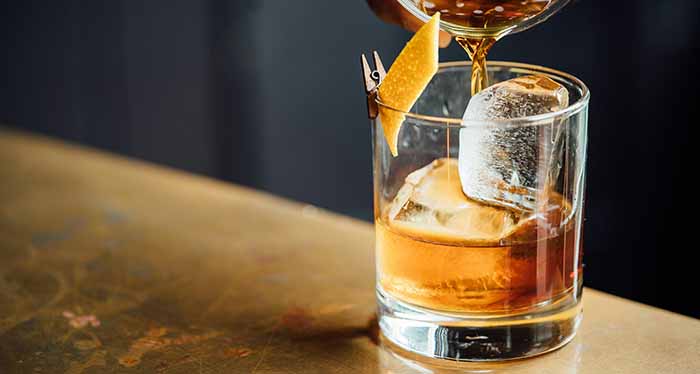
[11] Scotch on the rocks with a twist (photo © Adam Jaime | Unsplash) .
________________
*Why is a citrus peel expressed (twisted) over a cocktail? This action sprays a fine mist of essential oils from the peel’s skin (the flavedo), creating a powerful aromatic experience that boosts scent, alters perception of flavor, and balances bitterness.
†The Boulevardier is a 1920s Prohibition-era cocktail created in Paris by American expat Erskine Gwynne, a writer who named it after his literary magazine, The Boulevardier, a monthly magazine for American expats in Paris that he published from 1927 to 1932. Harry McElhone, of Harry’s New York Bar, popularized it in his 1927 book, “Barflies & Cocktails.” The drink is a whiskey-based variation of the Negroni, traditionally using bourbon, Campari, and sweet vermouth. While the Negroni remained popular, the Boulevardier faded into obscurity for many decades. It was rediscovered in the 2000s, driven by the craft cocktail renaissance, and is now recognized as a modern classic. While the 1:1:1 ratio is classic, some modern bartenders use a higher ratio of bourbon to balance the bitterness of the Campari, often preferring 3:2:2 or 2:1:1 ratio.
†The Rob Roy, created in 1894 at New York City’s Waldorf Astoria hotel, is essentially a Scotch-based Manhattan. It was developed by bartender Charles McPherson to promote an operetta about the Scottish hero Robert Roy MacGregor, and it became an instant hit. It remained a staple in New York hotel bars until Prohibition began in 1919.
††Paper Plane, created in 2008 by bartender Sam Ross at the popular Milk & Honey bar in New York City, is a modern cocktail classic. Inspired by M.I.A.’s song Paper Planes, it was developed by Sam Ross and Sasha Petraske at the Milk & Honey bar in New York City, as a favor for a former colleague, Toby Maloney, who wanted a summer drink to serve at his Chicago bar, The Violet Hour. It’s a twist on the Last Word word cocktail, featuring equal parts bourbon, Amaro Nonino, Aperol, and lemon juice.
‡The Penicillin cocktail was created in 2005 at the Milk & Honey bar in New York City, by an Australian, bartender Sam Ross. A riff on the Bourbon-based Gold Rush cocktail, it was named tongue-in-cheek for its medicinal, “cure-all” properties. It became an instant classic in the 21st-century cocktail revival.
CHECK OUT WHAT’S HAPPENING ON OUR HOME PAGE, THENIBBLE.COM.
|