Can You Name The 10 Different Types Of Cookies? - The Nibble Webzine Of Food Adventures The 10 Different Types Of Cookies?


THE NIBBLE BLOG: Products, Recipes & Trends In Specialty Foods


Also visit our main website, TheNibble.com.

Can You Name The 10 Different Types Of Cookies?

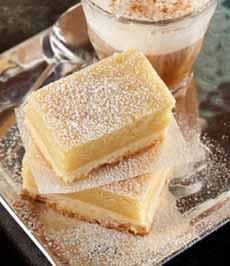
Two lemon bars with an iced coffee.
[1] Why are cookies like these lemon bars called cookies instead of cake? Because they’re finger food, eaten without a fork (photo © King Arthur Baking).

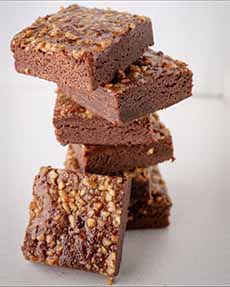
A stack of Palmer House brownies.
[2] Similarly, brownies are also bar cookies (photo © Palmer House).

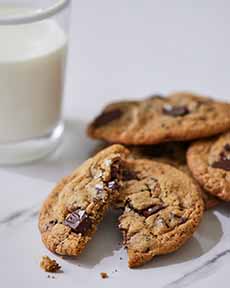
A plate of chocolate chip cookies with a glass of milk.
[3] Some of America’s favorite cookies—chocolate chip, oatmeal, and peanut butter—are drop cookies (photo © American Heritage Chocolate).

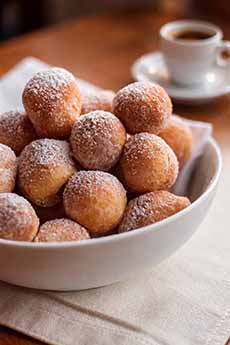
A bowl of zeppole and a cup of espresso.
[4] Zeppole, an example of fried cookies, are balls of yeast dough. Like brownies and bars, they’re considered cookies rather than pastry because they are finger food (photo © The Nibble).

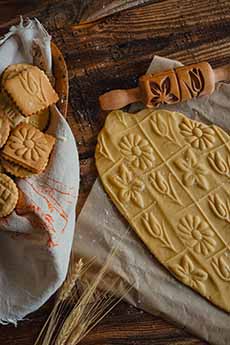
Springerle cookie dough rolled out, with the baked cookies.
[5] Springerle cookie dough rolled out alongside baked cookies (photo © Hello Aesthe | Pexels).


What does one do on National Homemade Cookie Day, October 1st?

One revisits the 10 different styles of cookies and decides which one to bake.

Then, because it’s also International Coffee Day, we invite the neighbors for coffee and cookies.

Below:

> The 10 basic styles of cookies.

> America’s favorite cookies.

> America’s top cookie brands.

Elsewhere on The Nibble:

> The history of cookies.

> Different varieties of cookies: a photo glossary.

> The differences between butter cookies, shortbread, and sugar cookies.

> The year’s 44 cookie holidays.

> Christmas cookie recipes.


1. THE 10 BASIC STYLES OF COOKIES

The different styles of cookies are classified by the way the dough is handled.

There’s also a “faux” cookie, the no-bake cookie, which is made without dough.

Bar Cookies. Here, batter or other ingredients are poured or pressed into a rectangular pan (sometimes in multiple layers), then baked and cut into individual-sized squares that have a dense cake-like consistency. Brownies and bars are examples of bar cookies. In the U.K., bar cookies are known as “tray bakes.”

Drop Cookies.
A relatively soft dough is dropped by the spoonful onto the baking sheet. During baking, the mounds of dough spread and flatten. Chocolate chip cookies, oatmeal cookies and coconut macaroons are examples of drop cookies.

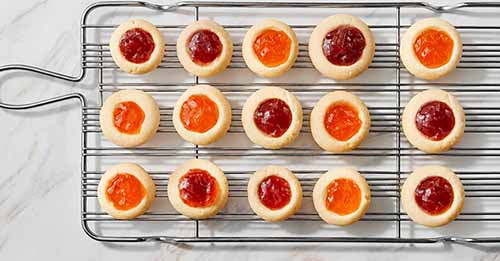
Filled Cookies. The cookie dough is stuffed with fruit, jam or other confection. They can be like thumbprint cookies (photo below); or the fruit/jam can be totally enclosed in the dough. Other types of filled cookies include Linzer cookies and other sandwich cookies filled with jam, often with a small cutout on top, and stroopwafels.
 
Thumbprint cookies cooling on a wire rack.
[6] Jam-filled thumbprints are a popular filled cookie (photo © Taste of Home).
 
Fried Cookies. These are fried dough, often dusted with powdered sugar. Examples include the Jewish/Polish kruściki, and the Italian zeppole. Fried dough is becoming increasingly popular, with chocolate chip cookie dough, oatmeal cookie dough and others all headed to the fryer.

Molded Cookies. Made from stiff dough, these cookies are shaped by hand, and embossed with a mold or with a stamp, including a Springerle rolling pin, before baking. Wreath cookies are an example.

No-Bake Cookies. These are “faux” cookies, a kind of candy-cookie hybrid. No-bake cookies are made with a cooked stovetop mixture that functions like a dough before it sets. Examples include haystack cookies, no-bake coconut cookies, peanut butter cornflake cookies, and the iconic Rice Krispies Treats.

Pressed Cookies. Made from a soft dough that is extruded from a cookie press (cookie gun) or piped from a pastry bag into various decorative shapes. Spritz cookies and French macarons are examples.

Refrigerator Cookies or Ice Box Cookies. Made from a stiff dough that is refrigerated in logs until it becomes hard. It’s then sliced into rounds and baked. Examples include pinwheels and shortbread.

Rolled Cookies (Cutout Cookies). These cookies are made from a stiffer dough that’s chilled, rolled out, and cut into shapes with a cookie cutter, knife or pastry wheel. Gingerbread men are an example (or any cookie made with a cookie cutter).

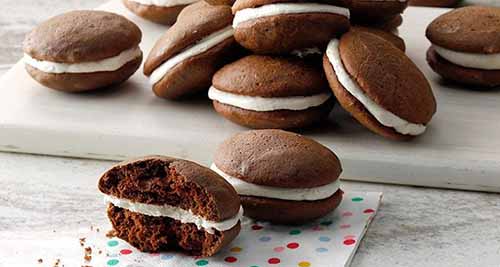
Sandwich Cookies. Sandwich cookies are rolled or pressed cookies that are assembled as a sandwich with a sweet filling. Buttercream, ganache, jam, marshmallow cream and peanut butter cream are popular. Oreos—perhaps the most famous sandwich cookie in the world—and whoopie pies are examples. French macarons are perhaps the most elegant example: two almond-flour cookies filled with a layer of ganache.
 
A plate of chocolate whoopie pies with vanilla cream filling.
[7] Whoopie pies are sandwich cookies with cake-like halves (photo © Taste of Home).


2. AMERICA’S FAVORITE COOKIES

Customer polls will vary, but these cookies typically rank among America’s favorite cookie flavors.

  1. Chocolate chip, widely considered the undisputed number-one favorite across the country.
  2. Peanut butter, a classic that consistently lands near the top.
  3. Sugar cookie, beloved for its simplicity and versatility for decorating, during holidays as well as everyday baking.
  4. Oatmeal raisin, a chewy, traditional favorite.
  5. Peanut butter blossom, the iconic peanut butter cookie topped with a chocolate kiss.
  6. Double chocolate, a chocolate cookie with chocolate chips or chunks.
  7. White chocolate macadamia nut, a flavor popularized in the 1980s by Mrs. Fields.
  8. No-bake cookies, made on the stovetop instead of in the oven.
  9. Molasses-ginger, warmly spiced favorites that are popular during cooler months.
  10. Macaroon, a coconut-based flourless cookie that substitutes shredded coconut and egg whites for flour.


3. AMERICA’S TOP COOKIE BRANDS

We include these because someone asked. Mass-market cookie brands taste nothing like delicious homemade cookies. Yet, America buys some $15.8 billion worth each year.

Mass-market cookies use inexpensive, shelf-stable fats, high-fructose corn syrup and/or corn syrup solids, artificial flavors and colors, and chemical preservatives.

Home-baked cookies rely on real dairy, whole pantry staples, and are chemical-free.

  1. Oreo, America’s (and the world’s) best-seller, a chocolate sandwich cookie known for its classic cream filling and endless flavor variations.
  2. Chips Ahoy! are America’s top-selling chocolate chip cookies.
  3. Girl Scout Cookies, while seasonal, sell enough Thin Mints and Samoas to take third place.
  4. Pillsbury refrigerated break-and-bake dough and soft-baked packaged cookies.
  5. Pepperidge Farm, considered a premium brand, with many fans of its Milano chocolate-filled sandwich cookies.
  6. Keebler, famous for nostalgic favorites like Fudge Stripes and Chips Deluxe—and the Keebler Elves, of course.
  7. Nestlé, a staple for ready-to-bake refrigerated cookie dough and baking essentials like morsels.
  8. Nilla, classic vanilla wafers that are a key ingredient in some banana pudding recipes.
  9. Royal Dansk, a classic butter cookie imported from Denmark. Packaged in a recognizable blue tin, they use real butter and contain no artificial colors or preservatives.
  10. Famous Amos, bite-sized, crunchy chocolate chip cookies, mostly sold in individual snack packs.


CHECK OUT WHAT’S HAPPENING ON OUR HOME PAGE, THENIBBLE.COM.


Comments are closed.


© Copyright 2005-2026 Lifestyle Direct, Inc. All rights reserved. All images are copyrighted to their respective owners.