Yummy Beet Chips & Dips Recipes For National Chip & Dip Day
|
|
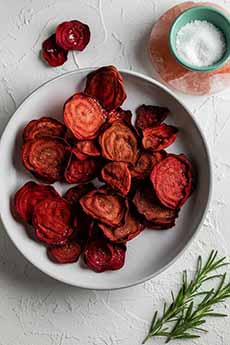
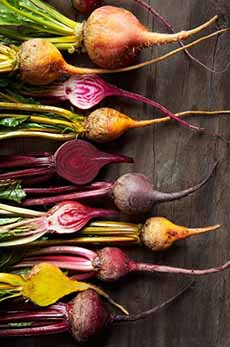
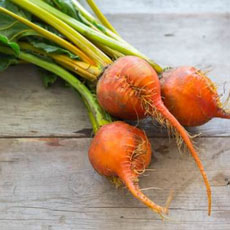
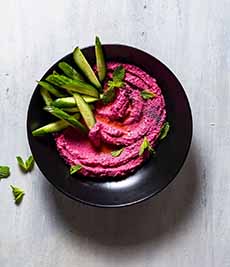
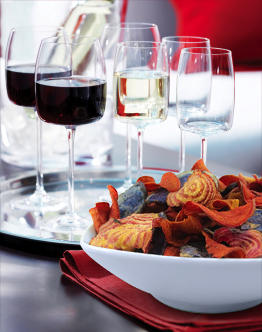
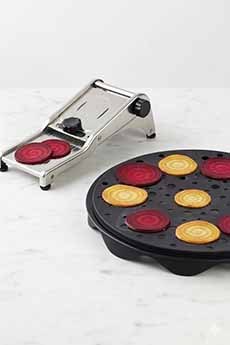
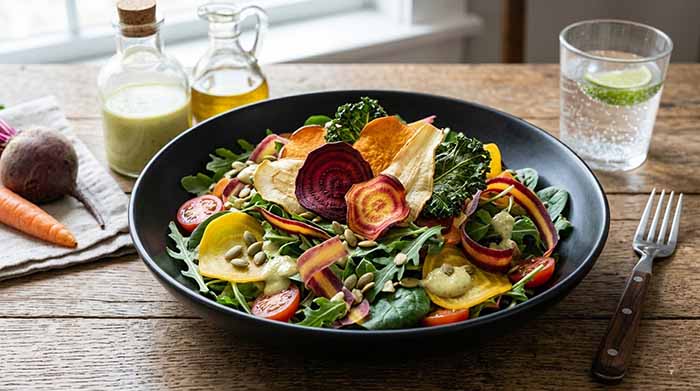
How about something different for National Chip & Dip Day, March 23rd? We’re having beet chips with two different dips. Thin-cut beets bake up delicate and crunchy, with an intense, earthy beet flavor that’s wonderful with rosemary and sea salt. The chips feel fancier than store-bought veggie chips, and they’re simply delicious with wine, beer, or a Martini (dirty or otherwise). Our tips: The beet chips are best when they’ve had a chance to crisp up, so time them to come out of the oven a few minutes before you want to eat them. For accompaniments, something like a light chive or dill dip wouldbe great. The chips would also be good as part of an ensemble that includes fresh veggies and hummus. If you have a dehydrator, so much the better; or buy this affordable microwave version (photo #7)—we recommend buying an extra tray). Below: > Three dips to pair with them. > The history of vegetable chips. Elsewhere on The Nibble: > Beet hummus recipe (photo #4). > The history of potato chips (ancestor of vegetable chips). > The year’s 90+ snack holidays. > The year’s 95+ vegetable holidays. If you have a mandoline, now’s the time to get it out. The red beets make dazzling chips, but we made a second batch with yellow beets and mixed them together. Gorgeous! 1. PREHEAT the oven to 300°and line a baking sheet with parchment paper. 2. TOSS the beets with kosher salt, rosemary sprigs, and olive oil and let them sit for 15 minutes. The beets will sweat a bit. Drain them and remove the rosemary. 3. TOSS the beets with sea salt and transfer them to the baking sheet, laying the beet slices out in a single layer. 4. BAKE for 45 minutes, and then check: The chips should be dark red and curled on the edges. If not, bake them for another 15 minutes or longer if necessary. 5. TRANSFER to a cooling rack to crisp up, and then serve immediately. Tip: Use a white platter so the color pops. Beet chips have an earthy, concentrated sweetness and are thicker than potato chips, so they can handle a much thicker, bolder dip. Whipped Feta Dip With Lemon and Hot Honey The salty tangy of the feta sets of the sugar in the beets. Beet and horseradish are a classic Eastern European pairing. Balance the earthiness of beets with this high-acid creamy dip. This vegan dip is hearty and protein-packed from the beans. Beans make a smoother dip than conventional chickpea-based hummus. Going back millennia, the dehydration and frying of sliced vegetables was a long-standing cooking technique. In the mid-19th century, what we call thinly sliced, crunch fried potatoes got commercialized as “chips.” Potato chips were invented by accident in a contretemps at a resort in Saratoga, New York in 1853. In fact, the situation soon‡ led to the use of the word “chip” for the potato chips we know today: Because the potatoes were “chipped,” i.e., sliced‡, “Saratoga Chips” became a well-known, became sold to the many summer tourists, and the word “chip” shifted to describe crunchy, paper-thin snacks. (In the U.K. the same snacks are called crisps.)) The first print mention of “potato-chip” appeared in print in the U.S. by 1854. By 1858, the “crispy delicacy” appeared in recipe books. After 75 years, the generic “potato chips” eased the name “Saratoga Chips” out of the way. Certainly, home cooks who like to deep-fry created their own chips. But home chip-making got a boost in the 1970s when home dehydrators came onto the market. Health-oriented people began to make their own apple chips, fruit leathers, jerky, and veggie chips (today, beet, kale, parsnip, sweet potato, and zucchini chips are staples). In the early 1990s, the famed infomercial entrepreneur Ron Popeil released the Ronco Electric Food Dehydrator. “Set It and Forget It!” was the tag line. This made dehydrators affordable and accessible to the average household. Around the same time, consumers who had known no thing about jerky beyond Slim Jim realized there was tender, quality jerky to be made at home. Ronco was there to help feed their need for beef snacks. |
|
|
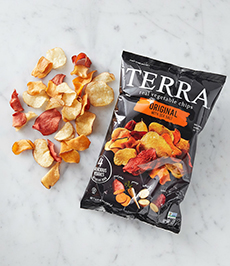
Vegetable Chips As A Commercial Snack In the late 20th century, what consumers mean by “vegetable chips”—beet, carrot, parsnip, sweet potato, taro mixes—became widely available as a packaged snack. A big retail order from Saks Fifth Avenue pushed them to focus on chips full-time. They launched Terra Chips in 1990 (photos #5 and #6). Bags of Terra’s Real Vegetable Chips flew off the shelves. The duo gave up catering and focused on Terra Chips full-time*. The brand quickly expanded into mainstream grocers and health food stores. Prior to then there were niche/regional products and imported snacks—largely available at small natural food stores—but Terra Chips had a major hand in popularizing the category. There are now some 16 different flavors of Terra Chips—including Beets & Sweets—plus seasonal flavors. Given America’s thirst (pun intended) for crunchy, salty snacks, there may be no end in sight! The article continues below with new ways to use veggie chips. Chefs and home cooks are already using veggie chips as bases for tartare or ceviche canapés, and for a twist on nachos (because beet, carrot, parsnip, and taro have higher fiber than corn chips, they don’t get soggy as quickly under the toppings). Because vegetable chips—especially those made from beets, carrots, and parsnips—retain their cellular structure and concentrated sugars better than potatoes do, they are being utilized as versatile building blocks in the kitchen. They’re also gluten free. Use them for:
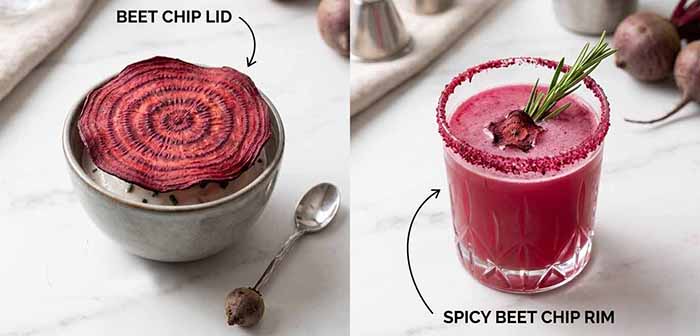
**An amuse-bouche is an hors d’oeuvre served at the table at the start of a meal, to “awaken the palate.” It means “mouth-amuser” in French, and it’s something unanticipated. While the provenance of fine restaurant chefs, we enjoy it so much that we now serve them at home. The concept originated during the Nouvelle Cuisine movement in France in the 1960s and 1970s. It was popularized by a small circle of legendary French chefs: Paul Bocuse, Michel Guérard, and the Troisgros brothers, Jean and Pierre. †The Terra Chips line as of this writing includes Original plus Blues, Classic, Exotic Potato, Heritage Blend, Mediterranean Plantains, Salt & Vinegar, Screamin’ Hot, Sour Cream & Onion, Sweet Plantains, Sweet Potato, Sweet Potato Crinkle Cut, Sweet & Smoky BBQ, Sweets & Beets, and Taro. Seasonal flavors include He5rbed Stuffing, Red, White & Blues, and Sweets & Apples. ‡The first recorded food to be called a chip was in 1769, referring to thin, preserved slices of fruit (like orange or lemon peel). At this point, it meant any thinly sliced and dried piece of a plant. In the mid-19th century U.K., “chips” began to describe potatoes, but they referred to (and still refer to) what Americans call French fries. In British English, the potatoes were were cut with a knife—i.e., chipped—into chunks. The famous “fish and chips” consists of fried fish fillets with these fried chips. Charles Dickens is credited with one of the first literary mentions in “A Tale of Two Cities” (1859), where he describes “husky chips of potato, fried with some reluctant drops of oil.” ‡‡The feta-horseradish dip is served in small ramekins or whatever serveware you have that works. We serve it as an amuse-bouche. Ingredients for 1.5 cups, you’ll need 8 ounces (225g) firm feta, crumbled, 1/2 cup plain Greek yogurt (full fat for stability), 2 tablespoons EVOO, 1.5 tablespoons prepared horseradish (liquid drained), 1 tablespoon fresh lemon juice, 1 teaspoon lemon zest, 1/4 teaspoon fresh-ground pepper (use white pepper if you want a perfectly white dip), and an optional 1 teaspoon honey. Preparation: 10 minutes. (1) Place the crumbled feta and EVOO in a food processor and pulse until it starts to become a thick paste. Add the yogurt and lemon juice. Process on high for 2–3 minutes until you have a completely smooth, aerated “mousse” texture. If it’s too stiff, add one more tablespoon of yogurt. (2) Fold in the horseradish, lemon zest, pepper, and optional honey. Pulse just 3–4 times to combine; don’t over-process the horseradish, or it can become bitter. (3) Chill to set. Transfer the dip to the individual ramekins and smooth the tops. Cover with a bit of plastic wrap and chill for 30 minutes (or longer) to allows the proteins in the feta to firm back up, creating a “structural” surface for the beet chip lid. Give the ramekins a gentle tap on the counter to remove air bubbles and create a glassy, flat top. Use a small offset spatula or the back of a warm spoon to smooth the tops. If any dip gets on the inner rim of the ramekin, wipe it away with a damp paper towel before refrigerating. Place the beet chip lid on at the last moment before serving, so moisture from the yogurt won’t soften the underside. Optional surprise garnish: When the guest lifts up the beet chip, you can put a colorful surprise on top of the white dip. Suggestions: pomegranate arils and minced mint, toasted black sesame seeds and smoked salt, fried capers and lemon zest. Add it to the chilled dip, before placing the beet lid on top. Use the back of a small spoon to create a tiny “well” or indentation in the center of the chilled dip. Place the garnish in a tight, vertical pile in the well, keeping the garnish slightly lower than the rim of the ramekin to create a small air pocket between the dip and the beet chip lid. The air gap is the secret to keeping the chip crispy for up to 15–20 minutes after it’s been set on the table.
CHECK OUT WHAT’S HAPPENING ON OUR HOME PAGE, THENIBBLE.COM.
|
||