|
National White Wine Day is August 4th. Chardonnay is the world’s most popular white wine (source). But there’s so much more out there.
For National White Wine Day, why not try something new? Suggestions follow, but first:
> The year’s 22 white wine holidays.
> The year’s 25 red wine holidays.
> A brief history of wine.
HOW MANY OF THESE 22 WHITE WINES HAVE YOU HAD?
While Chardonnay, Sauvignon Blanc, and Pinot Gris/Pinot Grigio may roll off the tongue of American wine drinkers, they are just three of 21 different white wine grapes that are extremely popular around the world.
Here’s an overview of each of them.
We’ve listed them here in alphabetical order, rather than by popularity/amount sold worldwide. Some aren’t readily available in the U.S. But if you travel to their country of origin, be sure to order a glass!
Airén is a grape variety traditionally found only in its native Spain. Currently, Airén accounts for 30% of all grapes grown there. Light and crisp, it pairs well with lighter flavors in seafood, poultry, salads, and fresh cheeses.
Albariño (Alvarinho) is a grape primarily found along the North Atlantic coastline of Spain and Portugal. It produces a dry, aromatic wines with fruity notes. Pair it with seafood, fresh salads, and light meats. Its high acidity and minerality make it a great palate cleanser following oily or creamy dishes. It also complements salty foods. Here’s more about Albariño.
Chardonnay (Chablis, White Burgundy) originated in the Burgundy region of France, but is now planted the world over. Oaked Chardonnay works well with richer seafood dishes like lobster, scallops, and salmon, roasted poultry, creamy sauces and risottos, and mild cheeses. Unoaked Chardonnay is better with lighter fare. Here’s more about Chardonnay.
Chenin Blanc is a grape variety from the Loire Valley of France. A high acidity wine, it can be used to make varieties from still to sparkling wines to dessert wines. Dry Chenin Blancs pair well with seafood, salads, and lighter poultry dishes. Pair off-dry or semi-sweet styles with spicy foods. Sparkling Chenin Blancs can be served as an aperitif or with fried foods. Here’s more about Chenin Blanc.
Furmint, from Hungary, makes versatile wines with high acidity and complex mineral character. Dry, unoaked Furmint works well with Asian dishes, fried foods, grilled and roasted dishes, and lighter pasta dishes. Oaked Furmint can handle richer dishes like duck, pork, and smoked ham. Sweet Furmint, like the luscious Aszú dessert wine, pairs beautifully with fruity or nutty desserts, and strong blue cheeses. Here’s more about Furmint.
Garganega is an Italian white grape variety that is primarily found in the Veneto region of northeastern Italy. One of the six most popular white grape varieties in Italy, it’s the grape used to make crisp white Soave wines. It’s well-suited to seafood, poultry, and dishes featuring fresh herbs.
Gewürztraminer originated in the South Tyrol area of northern Italy, but through mutation and breeding is now a prominent grape the Alsace region of France and in southeast Germany. Its recognizable nose of lychee, rose, and spices, moderate to low acidity, and a distinctive palate of tropical fruit, floral notes, and spice pair particularly well with bold flavors and aromatic spices: Asian cuisine, especially Thai and Indian, plus Middle Eastern and Moroccan dishes. Its natural sweetness makes it a good match for fruit-based desserts, and it can also stand up to richer, more flavorful cheeses. Not to mention, foie gras and lobster.
Grüner Veltliner, native to Austria, creates wines with bright acidity and peppery notes. They pair well with both light and rich recipes that feature spice, herbs, or citrus. Grüner pairs with any white wine-friendly food, and is very friendly to spicy cuisines such as Asian, Indian, and Mexican. Here’s more about Grüner.
Marsanne is a white grape variety most commonly found in the northern Rhône wine region (it’s the principal grape used in the wines of the Hermitage, Crozes-Hermitage, and Saint-Joseph). Pair it with seafood, poultry, and creamy sauces. As it ages, it takes to richer, more complex preparations.
Muller-Thurgau is a recent grape variety bred in the Germany in 1882 by a Swiss botanist, Dr. Hermann Müller from the Swiss canton of Thurgau. It’s light-bodied with delicate flavors and refreshing acidity. Pair it with roast poultry or pork, roasted vegetables, salads, vegetables, fresh and light cheeses.
Muscat (Moscato) ranks among the oldest domesticated grape varieties, with its history stretching back four thousand years to the ancient Egyptians and Persians. Its origins are not certain, but it spread throughout the Mediterranean and Europe, eventually reaching South Africa, Australia, and the New World. Dry Muscat is excellent with Asian-inspired dishes, cream sauces, and rich meats like duck. Sweeter styles complement creamy desserts from cheesecake to fruit tarts, and also pair well with spicy Indian and Thai fare (sweetness balances heat). Here’s more about Muscat.
Pinot Blanc originated in the Burgundy region of France. It’s a natural mutation of Pinot Gris, which itself is a mutation of Pinot Noir. It became a leading grape in the Alsace region. Crisp acidity and subtle fruit flavors make it a great match for flaky fish, seafood, poultry, salads, creamy sauces (including pasta), and soft cheeses. Enjoy it with roast chicken and that classic Alsace-Lorraine specialty, quiche.
Pinot Gris (Pinot Grigio) is believed to have originated in the Burgundy region of France and spread to other regions, including Alsace, where it’s a major grape. The wine, with crisp acidity and fruity notes, pairs well with poultry, pasta with light sauces, light seafood, salads, and creamy or tangy cheeses. Here’s more about Pinot Grigio.
Riesling, which originated in the Rhine Valley of Germany, produces wines in styles from bone-dry to lusciously sweet. Dry Rieslings (Kabinett) pair well with seafood, poultry, and pork, while off-dry styles (Spätlese) excel with spicy and Asian cuisines. Sweet Rieslings (Auslese, Beerenauslese, and Trockenbeerenauslese) are delicious with desserts, rich lobster dishes, and foie gras. Here’s more about Riesling.
Roussanne, a white wine grape found primarily in the Rhône Valley wine region of France, is often blended with Marsanne, but can stand on its own. With a complex aroma and rich, full-bodied character, it pairs well with seafood, poultry, and rich cheeses—and with most bold flavors and textures.
Sauvignon Blanc (Sancerre), originating in the Loire Valley of France, produces crisp, dry, refreshing white wines. Its bright acidity and herbaceous notes partner with seafood (especially oysters and scallops), chicken, goat cheese, and many green vegetables and herbs. Here’s more about Sauvignon Blanc.
Semillon, a versatile grape that originated in the Bordeaux region of France, makes dry, crisp wines to pair with shellfish, sushi, and salads. As it ages, the wine becomes richer and honeyed, making it a great match for lobster, risotto, and cream sauces. Semillon dessert wines, particularly those from Sauternes and Barsac, are famously paired with foie gras and rich desserts.
Silvaner is primarily grown in western Germany and the Alsace region of France. The wines’ balanced acidity and subtle flavors complement seafood, fresh cheeses, salads, and lighter meat dishes like poultry and pork. Drink them with Asian cuisine and German classics like onion tart and sauerkraut.
Torrontés is grown almost exclusively in Argentina. It produces fresh, aromatic wines with moderate acidity, smooth texture and mouthfeel. Its citrusy notes and balanced acidity make it a great match for seafood, spicy Asian cuisine, and Latin American specialties like ceviche and empanadas.
Verdicchio is primarily found within the Marche region of central Italy, where it produces crisp and aromatic wines with high acidity and subtle minerality. Pair them with seafood, vegetable dishes, and creamy sauces.
Viognier is originally from the South of France, where it produces a full-bodied wine with medium acidity and ripe fruit notes. Pair it with lighter cheeses, shellfish, and butter-based sauces. Here’s more about Viognier.
HOW ABOUT SOME BUBBLY?
Most sparkling wines are white wines. Depending on the source, they’re made from different white grapes.
So if you want a special celebration on National White Wine Day, have a glass of bubbly.
You don’t have to pop the cork on Champagne (although we’re always happy to. Consider these more affordable bubblies, which can be had at half the price or less:
Asti Spumante, Moscato d’Asti, and Prosecco from Italy.
Cava from Spain.
Crémant from France.
Espumante from Portugal.
Sekt from Germany.
Sparkling wines from Austria, England, New Zealand, South Africa, the U.S. and other countries.
We’d be remiss if we didn’t point out:
Red wine sparklers such as Italian Brachetto and Lambrusco, and Australia’s sparkling Shiraz.
Plan ahead: August 28th is National Red Wine Day.
|
|

[1] If you white wine choices vary between Chardonnay and Pinot Grigio (Pinot Gris), why not try something new (photo © Zwiesel Glas)?
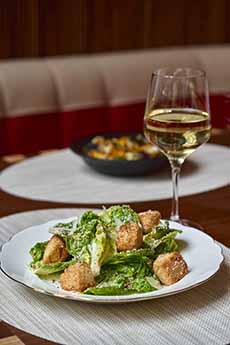
[2] Have Chardonnay with a Caesar salad. The creamy, buttery texture of the wine complements the rich, creamy dressing and the salty flavors of the anchovies and Parmesan cheese (photo © Rosevale Kitchen | NYC).
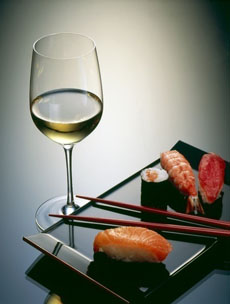
[3] With sushi, sashimi, and raw shellfish, we like Gewurtztraminer, Pinot Gris, and Riesling (photo Lognetic | Dreamstime).

[4] A young Sauvignon Blanc (Semillion) pairs nicely with shellfish, sushi, and salads, and also with goat cheese, another specialty of the Loire Valley (photo © Loire Valley France).
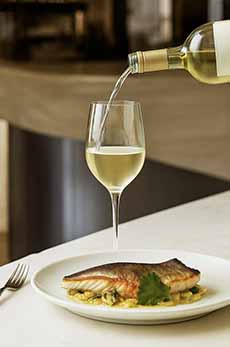
[5] It’s also great with grilled fish (photo © Stella 34 Trattoria | NYC).
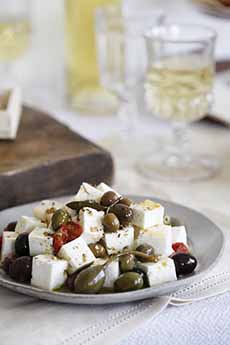
[6] For an antipasto of feta, olives, capers, and red peppers—or a Greek salad with the same—have a glass of Albariño (photo © Vermont Creamery).
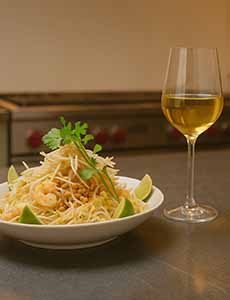
[7] How about some Gewürtztraminer with your Pad Thai (photo © Folded Hills Winery).

[8] White wines that are vinified to be sweet grow darker and more honeyed with age. Here, we happily pair a strawberry tart with a glass of Semillon-based Sauternes (A.I. photo).
|



