|

[1] Fruit-based aqua fresca is a thirst-quencher in Mexico, Central America and the Caribbean. Here’s the recipe (photo © New York Times | Photo: Christopher Testani | Stylist: Simon Andrews).
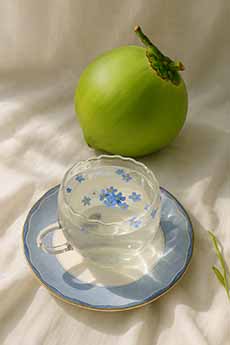
[2] Coconut water is almost always drunk cold, as that’s when it’s most refreshing. But you can still serve it in a pretty with a garnish of forget-me-nots (photo © Julia Blotskyaya | Pexels).
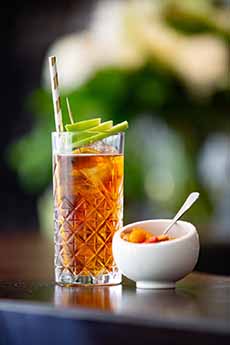
[3] Iced tea. The garnish of apple slices (approximately 86% water) makes them a hydrating snack as well (photo © Tim DeWeerdt | Pexels).
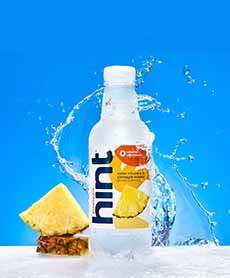
[4] Ice water. Water hydrates equally whether cold or room temperature, still or sparkling, plain, or or flavored (photo © Hint).
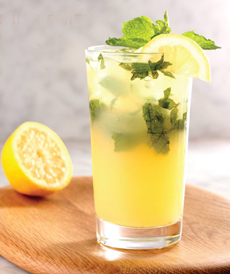
[5] Lemonade can be flavored in so many ways. Check out these recipes (photo © Simit + Smith).
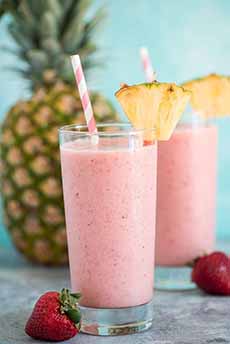
[6] A smoothie adds protein to your favorite hydrating fruits if the recipe includes yogurt Here’s the recipe (photo © Lil’ Luna).

[7] Spa water. Citrus fruits, berries, and herbs are a standard blend. For herbs, consider basil, cilantro, dill, fennel fronds, lavender, lemon balm, rosemary, sage, and tarragon (photo © Sunset Valley Growers).
|
|
A hot day in July is a great day to hold National Refreshment Day. It’s celebrated on the fourth Thursday, this year July 24th.
“Refreshing” can mean food or drink, but it should be cool and light with thirst-quenching qualities.
You should increase your intake of fluids—especially water—to help your body maintain proper fluid balance and support essential physiological functions.
While water is undoubtedly the best hydrator, we researched the most refreshing drinks worldwide and drew up a list of refreshers, below.
But, bad news for some: alcohol is not on the list.
As good as that cold beer may feel great down, alcohol actually makes you thirstier—it’s dehydrating, the opposite of what the body needs in hot weather. See why below.
Also below:
> Foods that are hydrating.
> The year’s 24 beverage holidays.
REFRESHING BEVERAGES AROUND THE WORLD
Refreshing Drinks In The U.S.
In alphabetical order:
Arnold Palmer: A half iced tea, half lemonade blend. Here’s the recipe.
Coconut water: naturally hydrating, and unsweetened varieties are low in sugar (photo #2).
Fruit juice: Grapefruit and orange juice are especially refreshing due to their acidity, but high in sugar. The best option is to dilute them with club soda or other sparkling water. Watermelon juice is one of the rare fruit juices that is truly thirst-quenching and naturally hydrating. Thicker juices like mango are more heavy than thirst-quenching.
Iced coffee: sweetened, unsweetened, black or with milk, flavored—even with a scoop of ice cream.
Iced tea: sweet or unsweetened, plain or flavored (mint, lavender, etc.). Herbal tea is best, with citrus or mint, because caffeine is a mild dieuretic. Check out these great recipes (photo #3).
Ice water: plain or flavored, still or sparkling. Note that the hydration is equal whether the water is chilled or room temperature (photo #4).
Lemonade: plain or flavored (mint, lavender, etc.). Look at these creative lemonade recipes (photo #5).
Smoothie: Blended fresh fruit and ice or yogurt (photo #6).
Soft drinks: Cold and fizzy feels refreshing, but the high sugar content can make sodas dehydrating if you have enough of them. Sugar-free versions are better, but caffeine in any cola is a mild diuretic.
Sparkling water: plain or flavored Often flavored with lime or grapefruit (photo #8). Rather than juice, which is high in sugar, mix sparkling water with juice in a 3:1 ratio.
Spa water: plain water infused with mint, cucumber and/or other fruits (citrus wedges, cucumber, strawberries). Check out these recipes (photo #7).
Refreshing Drinks In Europe
Cordial with Sparkling Water (UK): Fruit concentrate diluted with carbonated water.
Kvass (Eastern Europe): A slightly fermented, mildly sweet beverage made from rye bread.
Lassi (Sweet/Salted) (UK/Indian diaspora): Cold yogurt drink often flavored with mango or rose.
Spritz (Italy): Zero-proof/mocktail versions with soda water, served over ice†.
Refreshing Drinks In Latin America
Agua Fresca (Mexico): Light drinks made with fruit, water, and sugar—e.g., horchata, tamarindo, or watermelon (photo #1).
Chicha Morada (Peru): A chilled drink made from purple corn, pineapple, and spices.
Maté Cocido or Tereré (Paraguay, Argentina): Yerba mate brewed cold (tereré) with herbs and citrus.
Refreshing Drinks In The Middle East and Africa
Ayran (Turkey): Savory yogurt drink with salt—cooling and hydrating.
Hibiscus Tea / Bissap (West Africa): Tart, ruby-red iced tea made from dried hibiscus petals.
Jallab (Levant): Date syrup, rose water, and pine nuts over ice.
Mint Lemonade (Limonana): Strong lemon juice, mint, and sugar blended with ice.
Tamarind Juice (East and North Africa): Sweet-sour beverage enjoyed in several regions.
Refreshing Drinks In Asia
Bubble Tea (Taiwan): Cold milk tea with tapioca pearls; can be fruity or creamy.
Cendol (Southeast Asia): Shaved ice, coconut milk, and pandan jelly, often with palm sugar.
Iced Green or Jasmine Tea (China, Japan): Unsweetened, clean, cooling taste.
Kokum Sharbat (India): Made from the dried kokum fruit with cumin and sugar—tart and cooling.
We didn’t include Thai iced tea or coffee because of the large amount of heavy sweetened condensed milk.
REFRESHING FOODS
Certain foods are widely considered to be refreshing. Not surprisingly, they tend to be: chilled or cold, light in texture, moist or juicy. They can be sweet or tart.
Frozen Desserts: frozen yogurt, granita, ice cream, ice pops, sorbet. Given a choice, go for the lighter-body granita or sorbet.
Fruits: apples, berries, cucumber, melons, citrus (grapefruit, lime, orange). See the footnote for which fruits have the most water, and which to avoid.
Savory choices:
Gazpacho or other chilled soups.
Greek yogurt with herbs or tzatziki/raita.
Crisp salads with vinaigrette or yogurt dressing.
Shellfish on the half shell, sushi/sashimi (but use lemon wedges instead of soy sauce).
In general, stay away from salt. Lemon or lime zest, grated ginger, and mint are cooling substitutes.
WHY ALCOHOL MAKES YOU THIRSTIER
Alcohol is a diuretic, meaning it removes water from the body by increasing urine production. This causes the body to lose more fluids than it takes in, leading to dehydration.
Spirits, straight or mixed, are something to steer clear of. The high alcohol content may leave you more dehydrated than before—especially if you’re not drinking water alongside it.
Wine, while it’s not as intensely dehydrating as hard liquor, still has a mild diuretic effect. If you must have wine, a better option is a wine spritz.
Beer and low ABV drinks like spritzes and hard seltzers may feel cold and refreshing, but have the same dehydration effects.
If you must have any alcohol, the trick is to alternate each drink with tall glasses of water.
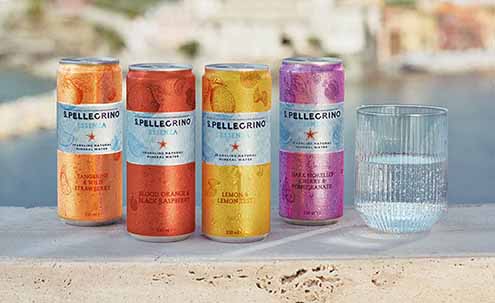
[8] One of our favorite sparklers, S. Pellegrino Sparkling Water, comes in cans for easy portability and recycling (photo © San Pellegrino).
|
|
THE YEAR’S 24 BEVERAGE HOLIDAYS
|
|
|
January, 2nd Week: National Mocktail Week
January 3: Drinking Straw Day
January, 3rd Full Week: National Fresh Squeezed Juice Week
January 15: National Fresh Squeezed Juice Day
January 26: National Green Juice Day
January 31: National Hot Chocolate Day
February, 4th Friday: Skip the Straw Day
March, 3rd Tuesday: Tea for Two Tuesday
April 30: National Bubble Tea Day*
May 4: National Orange Juice Day
May 6: National Beverage Day
May 8: Have A Coke Day
May, 3rd Wednesday: National Juice Slush Day
Friday Before Memorial Day: National Cooler Day
|
June 21: National Smoothie Day
July, 4th Thursday: National Refreshment Day
August 17: National Pineapple Juice Day
August 20: National Lemonade Day
September 20: National Punch Day
September 24: National Horchata Day
September 27: National Chocolate Milk Day
September 30: National Hot Mulled Cider Day
November 18: National Apple Cider Day
November 19: National Carbonated Beverage With Caffeine Day
The holidays above focus on non-alcoholic beverage holidays. Check out our other holiday lists for:
Coffee
Tea
Ice Cream Drinks
|
To dot the I’s and cross the T’s, another juice holiday is August 29th, National Lemon Juice Day.
________________
*Not all bubble tea contains tea, despite the name. Yes, traditional bubble tea contains real brewed tea (black, green, jasmine, oolong, etc.), mixed with milk or fruit flavorings, sweetened, and served with tapioca pearls, jelly, or popping boba.
Non-tea bubble tea is made with milk, creamers, or fruit syrups, but no actual tea (and is thus caffeine-free). Some examples: taro “milk tea” (taro powder and milk), fruit “milk tea” (made with fruit syrups and milk), and brown sugar boba (milk, brown sugar syrup, tapioca pearls [boba]).
> The history of bubble tea.
†The spritz originated in northern Italy in the 19th century when Austrian soldiers diluted local wines with a “spritz” (splash) of soda water. Over time, it evolved into a cocktail with a bitter liqueur and sparkling wine, like the Aperol Spritz. (The history of the spritz).
With the rise of non-alcoholic or “zero-proof” versions of alcohol, mocktails are created that follow the same formula: a bitter or aromatic base, a sparkling component (water, tonic water), citrus juice, and an optional citrus or herb (mint, rosemary) garnish.
‡Fruits with the highest water content include those that are 90% and above water (cucumber, cantaloupe, strawberries, watermelon) and those that are 80% to 89% (apples, grapefruit, grapes, oranges, peaches, pineapple, raspberries).
Other fruits are still nutritious, but less hydrating—and more calorie- and fiber-dense per gram. They include avocado, banana, passionfruit, persimmon, and dried fruits.
CHECK OUT WHAT’S HAPPENING ON OUR HOME PAGE, THENIBBLE.COM.
|



