Three Types Of Couscous & Recipes For National Couscous Day
|
|
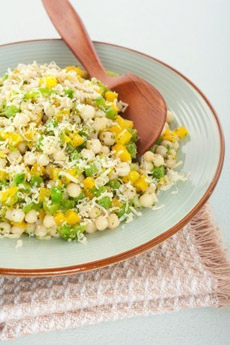
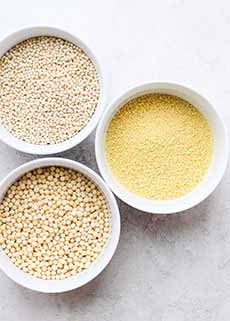
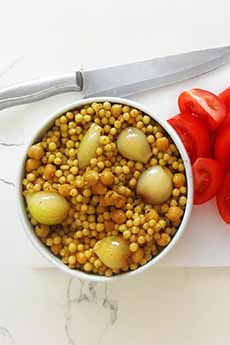
Chef Johnny Gnall has been experimenting with pearl couscous sent from Bob’s Red Mill, with delicious results. His report follows. If you have questions or suggestions for tips, email Chef Johnny. Couscous is a type of pasta made from semolina (wheat flour) and water. With its tiny, granular shape and quick cooking time, it’s a staple food in North African and Middle Eastern cuisines. While often mistaken for a grain, couscous is technically a pasta, made by forming semolina into small, rounded pellets. While most couscous is made from refined wheat, you can find whole-wheat couscous made from whole wheat durum flour, which contains all three parts of the grain (the endosperm, the germ, and the bran). August 5th is National Couscous Day. > The history of couscous is below. > So are the year’s 35+ grain holidays. When most people think of couscous (KOOS-koos), they think of Moroccan couscous: fluffy piles of semolina, their tiny grains not much larger than coarse cornmeal. But pearl couscous (also called Israeli couscous) has been making its way onto more and more menus and supermarket shelves. The beautiful round beads (pearls) of semolina are most deserving of finding their way to your kitchen. Pearl/Israeli couscous is larger and toothier than Moroccan couscous. (EDITOR’S NOTE: We prefer the term “pearl” to “Israeli” couscous. Pearl is an accurate description; “Israeli” seems to limit one’s thoughts of the ingredient to Israeli/Middle Eastern cuisine. You can use it to replace orzo or rice.) The pearls have a pleasant, chewy texture when properly cooked, giving the couscous a real comfort food quality. Think of macaroni and cheese made with big, thick elbow noodles. That same type of enjoyable, al dente bite is so satisfying, and it’s something that you can’t get out of Moroccan couscous (though you’re probably not looking for it there anyway). People often think of pearl couscous as exotic. But it’s made of the same semolina wheat as pasta. You should think of it as any other small cut of pasta, like alphabets; corallini, ditallini and tubettini (tiny tubes); orzo (shaped like grains of rice); and pastina (tiny stars). The key difference is that Moroccan couscous acts more like a fine grain that blends into dishes, while pearl and Lebanese couscous present more like small pasta that maintains their distinct pearl shapes and chewy texture. Pearl couscous substitutes seamlessly for rice or any grain. Cook pearl couscous like pasta: Bring salted water to a boil, using 1.5 times the amount of water as pasta (or cover the dry pasta by 2-3 inches). You can also use stock, or toss a bouillon cube into the water for extra flavor. Cooking time will vary; test after five minutes. The pearls will absorb some water and should be both soft and chewy. (Remember, it will continue to cook when you remove it from the heat.) From there, you can: Make A Couscous Salad Add diced tomato, red onion, feta cheese and torn basil for a Greek-style salad; use cherry tomatoes, sundried tomatoes or roasted red pepper when tomatoes are out of season. Or use chopped pistachios, golden raisins and cubed roasted squash for a Moroccan-style salad in any season. In fact, you can add just about any three ingredients to make a couscous salad. Try a vegetable, a nut or legume and an herb, tossed with olive oil, salt and pepper to taste, and a splash of acid—citrus juice or vinegar. Proteins are also welcome: cubes of chicken and tofu work especially well. The recipe in the photo at the top uses leftover corn and peas, a bit of oil and balsamic vinegar, and a garnish of grated Parmesan. For the best presentation, cut or chop your ingredients into small pieces, so they look at home nestled within the pearl couscous. Treat It Like Pasta Top couscous with tomato sauce and shredded Parmesan to keep it simple. Or toss it with olive oil, herbs and vegetables for Pearl Couscous Primavera. If you want to indulge, make some Pearl Couscous Carbonara with egg, Parmesan and diced pancetta. Go Full-On Comfort Food Three words: Mac. And. Cheese. The chewiness of pearl couscous really is wonderful with a gooey cheese like Gruyère or mozzarella, and a topping of crispy breadcrumbs (try panko). The symphony of tastes and textures will have your lids dropping in pleasure. Turn It Into Couscous Risotto Start by toasting the pearl couscous in a pot over medium-high heat with a touch of olive oil. Then begin stirring liquid in, just as you would with risotto. You can use any liquid that suits you; water or stock with a little white wine are probably your best bets. Take It Swimming Once it’s cooked, drop pearl couscous directly into soups, stews and chilis. It provides a pleasant texture and adds body to the food. To add some extra love, flavor the couscous cooking water with some of the vegetables or aromatics in the main dish. Just drop them into the pot with the couscous as it cooks. Carrots and onions impart a bit of sweetness, herbs add depth and flavor. Even a bone from whatever beast you may be stewing can be a nice touch to build the complexity of your couscous. Couscous is more than 1,000 years old. The Berbers, who lived along the northern (Mediterranean) coast of Africa, west of the Nile Valley (modern Algeria, Morocco and Tunisia—the Barbary Coast/Berber Coast), ate wheat as a staple grain. Over generations, they learned that by grinding the wheat and making couscous, it would keep for years—insurance against drought and famine. The result has long been a base for North African cooking. Couscous is made from yellow granules of semolina, made from durum pasta wheat, which are precooked and then dried. The pearl grains are the original couscous. |
|
|
They were made by hand-rolling semolina grains on screens, with olive oil, water and salt, letting the small grains fall through, and rolling them again until a consistent size grain was formed. The grains are then coated with olive oil salt and sun-dried, giving them a toasty flavor when cooked. The name is derived from the Berber seksu meaning well rolled, well formed and rounded. The term can refer to the ingredient itself or a prepared dish. Like pasta or rice, couscous is versatile and has numerous preparations. It is simple to prepare: Just add boiling water and let it sit. It can be flavored with exotic spices or served plain. North African stews (tagines) are traditionally served over it. Couscous is now widely available in most supermarkets. Keeping with food trends, specialty producers such as Bob’s Red Mill sell whole wheat couscous and tricolor in addition to the natural white pearls. The most important food grains are rice, wheat, and maize (corn). These three cereal grains provide more than half of the calories consumed by humans worldwide. Other grains like barley, oats, sorghum, and millet also play a significant role in global food production and consumption. ________________ *Check out The year’s 12 popcorn holidays. CHECK OUT WHAT’S HAPPENING ON OUR HOME PAGE, THENIBBLE.COM. |
||