|
Proceed with caution if you have alektorophobia: March 19th is National Poultry Day.
Alektorophobia is an intense fear of chickens, roosters or hens. Fortunately, it’s one of the more rare phobias. So our guess is that everyone reading this article can do so in comfort.
Evidently, many people give a cluck: There are 50+ annual holidays celebrating chickens, turkeys, ducks, and other fowl. See them all below.
Below:
> What distinguishes poultry from other meats?
> The most popular poultry dishes in America.
> Poultry etymology.
> The history of ducks.
> The year’s 50 poultry holidays.
Elsewhere on The Nibble:
> The parts of a chicken: How many different cuts can you name?
> The history of chickens.
> Chicken Glossary: The different types of chickens, chicken parts, industry terms, everything chicken.
> The history of turkeys.
WHAT DISTINGUISHES POULTRY FROM OTHER MEATS?
Poultry is distinguished from other types of meat in several ways:
Source: Poultry refers specifically to domesticated birds raised for meat, including chicken, turkey, duck, goose, quail, and guinea fowl, plus rabbit, a mammal. (The meat category includes beef, lamb, pork, and others; seafood is its own category).
Classification: Poultry is considered “white meat,” even though chickens and turkeys have both white and dark meat; and some, like duck and game birds, are entirely dark meat.
“Red meat,” which is darker due to higher amounts of myoglobin (the protein that makes meat red), includes beef, goat, lamb, veal, venison and other game meats (bison, elk, and numerous others below‡), and veal. Horse meat also falls into this category.
What about pork? The USDA classifies pork as red meat based on its myoglobin content and the fact that pigs are mammals, not birds. That the pork industry has marketed it as “the other white meat” since the 1980s (to position it as a healthier alternative to beef) does not make pork a white meat.
Fat: Poultry typically has lower fat content than red meat, with most of the fat concentrated in the skin (and easy to remove) rather than marbled throughout the meat.
Culinary: Poultry generally cooks more quickly than red meat. From a taste standpoint, it has a milder flavor profile.
Nutrition: Poultry (especially without skin) is generally lower in calories and saturated fat and higher in protein per ounce than most red meats.
THE MOST POPULAR POULTRY DISHES IN THE U.S.
Chicken is by far the most consumed poultry in the U.S., with turkey coming in second, followed by duck and other specialty birds‡ in much smaller quantities.
These dishes should be no surprise (rankings may vary by region):
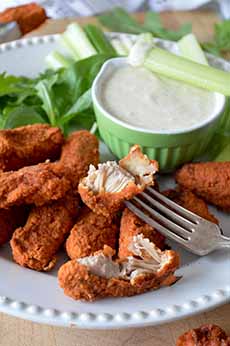
Fried chicken
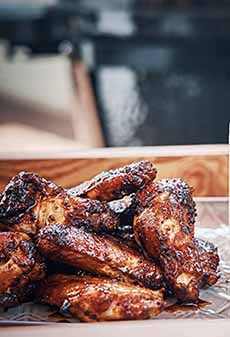
Chicken wings
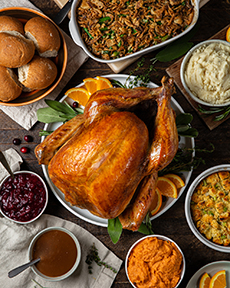
Roast turkey
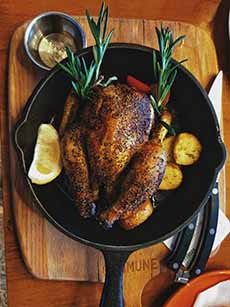
Roast/rotisserie chicken
BBQ chicken
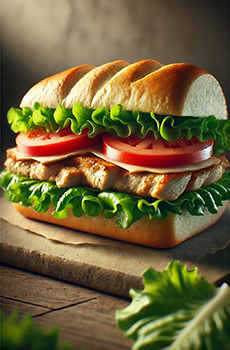
Chicken sandwich
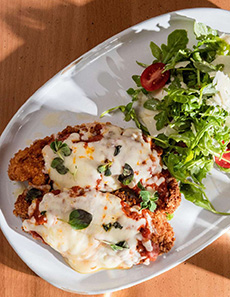
Chicken Parm (Parmesan, Parmigiano)
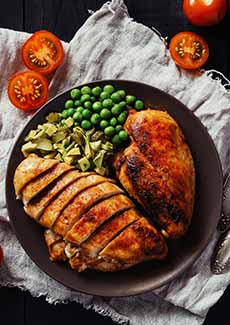
Grilled chicken breast
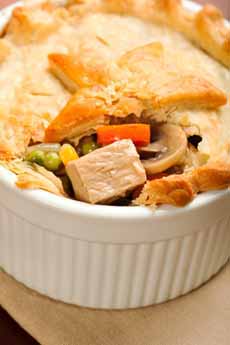
Chicken pot pie
Chicken fajitas
Chicken salad
Chicken and waffles
|
50+ ANNUAL CHICKEN, TURKEY & DUCK HOLIDAYS
|
|
January 12: National Curried Chicken Day
February, 1st Sunday: Super Bowl Sunday
March 13: National Chicken Noodle Soup Day
March 19: National Poultry Day
March 28: National Something On a Stick Day*
March 30: National Hot Chicken Day
April 4: National Chicken Cordon Bleu Day
May: International Respect for Chickens Month
May 4: International Respect for Chickens Day
May 29: National Chicken Salad Day
May 29: National Coq Au Vin Day
June 2: National Rotisserie Chicken Day
June 18: International Picnic Day
July 1: International Chicken Wing Day
July 6: National Fried Chicken Day
July, 2nd Friday: National Kebab (Kabob) Day
July 15: Orange Chicken Day
July 27: National Chicken Finger Day
July 29: National Chicken Wing Day
August 26: National McChicken Day
Labor Day Weekend: National Buffalo Wing Festival a.k.a. Wing Fest
September: National Chicken Month
September 10: National TV Dinner Day
September 23: Great American Pot Pie Day
October 15: National Chicken Cacciatore Day
October 20: National Chicken & Waffles Day
November: National Roasting Month
November 1: National Pâté Day
November 9: National Fried Chicken Sandwich Day
|
November 12: National Chicken Soup For The Soul Day
November 16: National Fast Food Day
Plus:
January 8: National Snuggle A Chicken Day
February 27: National Protein Day (India)
April 9: National Chicken Little Awareness Day†
May 14: Dance Like A Chicken Day†
May, end of 3rd Week: International Heritage Breeds Day
September 9: Colonel Sanders Birthday
September 10: National TV Dinner Day
September, 3rd Week: National Farm Animals Awareness Week
October 15: National Roast Pheasant Day
October 26: National Chicken Fried Steak Day
November 21: National Stuffing Day
TURKEY HOLIDAYS
March 30: National Turkey Neck Soup Day
June: Turkey Lovers Month
June, 3rd Sunday: National Turkey Lovers Day
September 23: Great American Pot Pie Day
November: Adopt a Turkey Month
November, 4th Thursday: Thanksgiving
November, 4th Thursday: Turkey-Free Thanksgiving
DUCK HOLIDAYS
January 18: National Peking Duck Day
May: National Duckling Month
PLUS
November: National Stuffing Month
|
POULTRY ETYMOLOGY
How did these popular foods get their names?
Fowl is a general term that refers to all poultry. It includes domesticated birds kept for their eggs, meat, or feathers. The word comes from Old English “fugol,” meaning bird.
Fowl can also to refer to birds in general, especially game birds, although in modern usage it’s most commonly associated with domesticated poultry.
Poultry derives from Old French pouleterie, which in turn comes from poulet meaning chicken or young fowl; and before then, from the Latin pullus, meaning young animal or young fowl.
The “-try” suffix indicates a class of animals.
Chicken comes from Old English ċicen or cycen, meaning young fowl; it evolved from Proto-Germanic *kiukīną, which referred to roosters and chickens. The word originally referred specifically to young chickens, but later expanded to include the species at any age.
Turkey got its name based on a geographical misunderstanding. When European settlers encountered these birds in the Americas (where they originated), they mistakenly believed they were related to guinea fowl. The latter were sometimes called “Turkey fowl” because they were imported to Europe through Turkey
In Turkish, the bird is called “hindi” (meaning “from India”), another geographical misunderstanding [source: Claude.ai 2025-03-16].
THE HISTORY OF DUCKS
Ducks evolved from ancient waterfowl ancestors, with fossil evidence suggesting their lineage dates back to the Cretaceous period, more than 65 million years ago.
The earliest known modern duck ancestors appeared during the Oligocene epoch, around 30 million years ago.
These early ancestors gradually developed the distinctive features we associate with ducks today, including webbed feet, water-resistant feathers, and broad bills.
Wild ducks naturally inhabit every continent except Antarctica.
Humans began domesticating ducks some 4,000-5,000 years ago, with evidence suggesting that the mallard (Anas platyrhynchos) was first domesticated in China.
Archaeological findings indicate duck domestication also occurred independently in several regions, including Southeast Asia and possibly parts of Europe.
Early domestication focused on selecting ducks for meat and egg production, as well as for their feathers. As humans migrated across the globe, they often brought domesticated ducks with them.
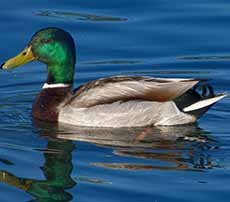
The mallard (photo #12) is considered the ancestor of most of the domestic duck breeds we know today.
Today, there are approximately 120 different species of ducks found worldwide, each adapted to a specific ecological niche.
The mallard remains the most widespread and recognizable duck species globally, and has been introduced to regions well beyond its native range [source: Claude.ai 2025-03-19].
|
|
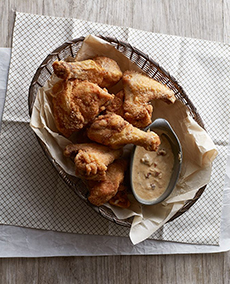
[1] Fried chicken is America’s favorite chicken dish (photo © Volpi Foods).

[2] The runner up is chicken wings, here shown Buffalo-style (photo © Nadine Primeau | Unsplash).
[3] You don’t have to wait for the holidays to enjoy roast turkey (photo © Gelson’s Markets).
[4] Roast chicken (photo © Cisco Lin | Unsplash).
[5] Perhaps the messiest to eat: barbecue chicken (photo © Mike’s Hot Honey).
[6] A grilled chicken sandwich. Many chicken sandwiches use a fried breast (photo © The Nibble | DALL-E 2025-03-16).
[7] Chicken Parm, a.k.a. Parmesan, a.k.a. Parmigiana (photo © Osteria Accadamia NYC).
[8] Grilled chicken breast (photo © Elena Leya | Unsplash).
[9] Chicken pot pie, a true comfort food (photo © M. Sheldrake | Dreamstime).
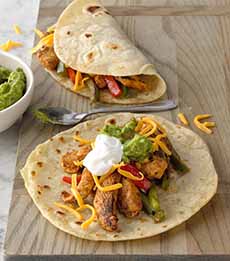
[10] Chicken fajitas. Don’t forget the guacamole (photo © Taste Of Home)!
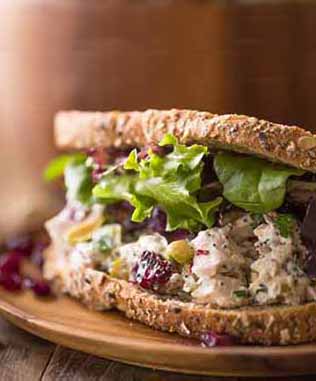
[11] Most chicken salad is pretty boring: just chicken, mayo, and celery. But this recipe rocks, with dried cranberries and pistachios (photo © Lovely Little Kitchen).
[12] The mallard, ancestor of most of today’s duck breeds (photo © Christian Papaux | Unsplash).
|
________________
*Think chicken skewers, including yakitori (Japanese), shish taouk (chicken kabobs—Middle Eastern), tandoori and tikka (India).
†National Chicken Little Awareness Day is an annual celebration of a folk tale about the chicken constantly thinks the world is coming to an end because acorns keep falling on his head.
‡National Dance Like A Chicken Day is meant to encourage the Chicken Dance without waiting for a prom, wedding, or other occasion.
‡‡What is game meat? Game meats refer to the flesh of wild animals that are hunted for food rather than raised on farms. Some game meats are domesticated (raised on farms) and are indicated with an asterisk*. Common game meats include:
Large Game: antelope*, bison, caribou/reindeer*, deer (venison)*, elk*, emu*, moose, wild boar*, yak*.
Small Game: hare, rabbit*, squirrel.
Game Birds: duck*, goose, grouse, guinea fowl*, ostrich*, partridge*, pheasant*, quail*, wild turkey*, woodcock.
Exotic Game: alligator: bear, beaver, kangaroo*, ostrich.
CHECK OUT WHAT’S HAPPENING ON OUR HOME PAGE, THENIBBLE.COM.
|