|
Red wine lovers: August 28th is National Red Wine Day. There are many different types of red wine made around the world. With more than a thousand varieties of wine grapes grown, that’s no surprise.
Today, we’ll highlight all of the red wines widely available in the U.S. and give you some “food homework”: Try a varietal** you’ve never had before.
Varietal refers to the type of grape used in making wine. Examples of familiar varietals include Cabernet Sauvignon, Chardonnay*, Merlot, Pinot Grigio*, and Zinfandel.
In much of the world, wines are sold by their varietal names.
In France and some other countries, the wines are known by their place names. Thus:
In the Burgundy region of France, the Pinot Noir grape is used to make the wine, but the wine is known as Red Burgundy.
In the Bordeaux region of France, the Cabernet Sauvignon, Merlot, and Cabernet Franc grapes are the primary grapes used to make the wine, but the wine is known as Bordeaux.
In the Rioja region of Spain, the wine is called Rioja but the grape is Tempranillo (among others).
Barolo is a commune in the Piedmont region of Italy. The wine is called Barolo, but the grape is Nebbiolo.
Below:
> Red grape varietals.
> Popular red wines by origin.
> Sweet red wines.
> The year’s 45+ red wine holidays.
Elsewhere on The Nibble:
> The year’s 40+ white wine holidays.
> A brief history of wine.
RED GRAPE VARIETALS
We start with some well-known red wine varietals that you’ll find in stores labeled with their varietal names. These grapes are grown worldwide, but we’ve included the county of origin.
Barbera – Northern Italy
Cabernet Franc – France
Cabernet Sauvignon – France
Carménère – France
Grenache/Garnacha – Southern France / Eastern Spain
Malbec – France
Merlot – France
Montepulciano – Italy
Nebbiolo – Italy
Pinot Noir – France
Sangiovese – Italy
Syrah / Shiraz – France
Zinfandel – Croatia
POPULAR RED WINES BY ORIGIN
In addition to purchasing varietal wines, you can purchase wines made with those same grapes that are labeled by their place of origin. These places are regions or smaller communes that have strict regulations as to what grapes can be used, the growing locales of those grapes, and how the wine is made.
Examples include:
Amarone della Valpolicella – Italy – Corvina and Rondinella Grapes
Barolo and Barbaresco – Italy – Nebbiolo Grape
Beaujolais – France – Grenache Grape
Bordeaux – France – a blend that can include Cabernet Franc, Cabernet Franc, Merlot, Petit Verdot, and very occasionally, Carménère, Grapes
Brunello di Montalcino – Italy – Sangiovese Grape
Châteauneuf-du-Pape – France – Grenache, Mourvèdre, and Syrah Grapes
Chianti – Italy – Sangiovese Grape
Côtes du Rhône – France – Grenache plus Cinsault, Mourvedre, and Syrah Grapes
Côte-Rôtie – France – Syrah and Viognier Grapes
Hermitage – France – Syrah Grape
Lambrusco – Italy – Maestri, Marani, Montericco, and Salamino plus a smaller amount of Ancellotta Grapes
Meritage – California – must contain at least two Bordeaux varietals: Cabernet Sauvignon, Cabernet Franc, Malbec, Merlot, and Petit Verdot Grapes
Priorat – Spain – Garnacha Grape
Red Burgundy – France – Pinot Noir Grape
Rioja – Spain – Tempranillo Grape
Super Tuscan† – Italy – French grapes like Cabernet Sauvignon and Merlot in addition to the Sangiovese Grape of Tuscany
Vino Nobile di Montepulciano – Italy – Sangiovese Grape
SWEET RED WINES
Also try a sweet red wine, if you don’t already drink them. They can be made from any grapes, and are delicious with cheese, as dessert wines or after-dinner wines.
These three are fortified wines, meaning that the wine has a distilled spirit, usually, brandy, added to it.
The purpose of adding the spirit is to increase its alcohol content and preserve its longevity.
Madeira – Madeira, a Portuguese island off the coast of Morocco (photo #6)
Marsala – Sicily
Port – Portugal (photo #5)
Red vermouth, also called sweet vermouth, is also a fortified red wine.
Sweet vermouth is mostly used for cocktails, pairing well with Bourbon, Dark Rum, Rye, and Scotch. Classic cocktails that use sweet vermouth include the Manhattan, Negroni, and Rob Roy.
While sweet vermouth can be sipped straight, it’s often too sweet for most people.
You have your food homework assignment. Ready, set, go!
THE YEAR’S 45+ RED WINE HOLIDAYS
February 16th: International Syrah Day
February 18th: National/Global Drink Wine Day
February, last Saturday: Open That Bottle Night
March 3rd: Mulled Wine Day
March 5th: National Nebbiolo Day
April 14th: Tannat Day
April 17th: Malbec World Day / National Malbec Day
April 27th: World Marselan Day
May, 2nd Saturday: World Buckfast Day‡‡
May 21: Mourvèdre Day
May 25: National Wine Day
June 10: Durif a.k.a. Petite Sirah Day
June 21st: World Lambrusco Day
June, 3rd Saturday: English Wine Week Begins
July: Dry July (an anti-holiday
July, Fourth Thursday: National Shiraz Day
July 24th: National Shiraz Day
July 25th: National Wine and Cheese Day
August 1: Old Vine Day
August 18th: National Pinot Noir Day
August 28: National Red Wine Day
August 29th: National Cabernet Sauvignon Day
August, Last Thursday Before Labor Day: International Cabernet Day
September 9th: International Box Wine Day
September 5th: National Chianti Day
September 9th: National Box Wine Day
September 10th: International Port Wine Day
October: Merlot Me Month
October 5th: Vranec World Day‡
October 7th: Mexican Wine Day
October 8th: International Pinotage Day
October, 2nd Full Week: Drink Local Wine Week
October 14th: International Prokupac Day
October, Last Thursday: Carignan Day
October 26th: International Mavrud Day
November 1st: International Xinomavro Day
November, First Full Week: International Sherry Week
November 7th: International Merlot Day
November, 2nd Thursday: International Tempranillo Day
November, Third Thursday: Beaujolais Nouveau Day
November 24th: International Carménère Day
November, Third Wednesday: Beaujolais Nouveau Day
November, Third Thursday: National Zinfandel Day
December 1st: International Maratheftiko Day
December 4th: National Cabernet Franc Day
December 4th: National Cabernet Franc Day
December 5th: Prohibition Repeal Day
December 16th: National Pinot Meunier Day
December 20th: National Sangria Day
Plus
July: Dry July
|
|
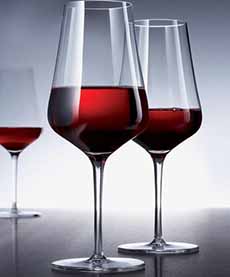
[1] Beaujolais, made from the Gamay grape, is one of the lightest of the red wines. Here it’s seen in a glass that’s specially crafted to show off its flavors and aromas (photo © Schott Zwiesel).
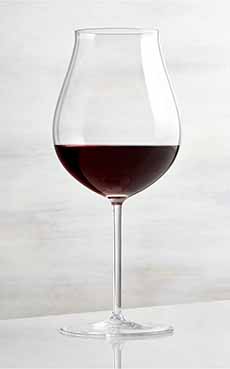
[2] Pinot Noir in a glass designed to enhance its flavors and aromas (photo © Crate & Barrel).
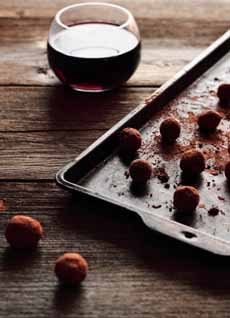
[3] Zinfandel with chocolate truffles (photo © Stella Rosa Wines).
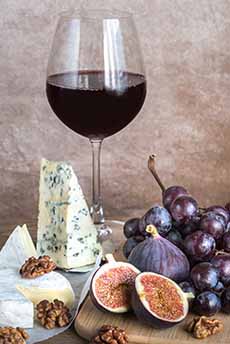
[4] Cabernet Sauvignon with blue cheese, figs, walnuts, and grapes (photo © Alex9500 | Panther Media).
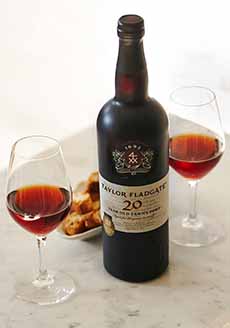
[5] Taylor Tawny Port 20 Years, delicious with cheese, dessert, or an after-dinner wine (photo © Taylor Fladgate).
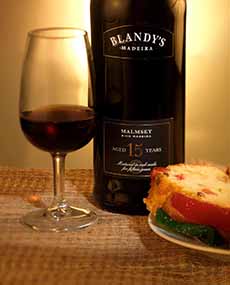
[6] Serve Madeira wine with nibbles such as olives, with salads tossed with a tangy dressing, with sushi or smoked salmon, with sheep’s and goat’s milk cheeses, and with desserts such as apple tarts and other fruity pastries (photo © Blandy’s Madeira Wine | Facebook)
|
________________
*These are white wine grapes.
**A varietal wine is a wine made primarily from a single, named grape variety, and that typically displays the name of the variety on the wine label. There are numerous varietal wines, but examples of some of the most popular include Cabernet Sauvignon, Chardonnay, and Merlot.
***There are three rosé holidays. National Rosé Day, the second Saturday in June holiday was founded in 2014 by Bodvár House of Rosés, a Swedish brand, as a U.S.-focused promotional holiday. The fourth Friday in June, International Rosé Day, was established in 2018 by the Provence wine region in France, which is essentially the global home of rosé. February 5th is celebrated as New Zealand (and Australia) National Rosé Day.
†Super Tuscans and Chiantis are both types of red wine made in Tuscany. The difference between a Super Tuscan wine and Chianti is D.O.C. status. For a wine to be labeled as Chianti D.O.C., it must be made from at least 80% Sangiovese grapes that are grown in one of the approved Chianti areas that lay between the cities of Florence, Sienna, and Arezzo.
Super Tuscans don’t follow the strict rules of the Chianti appellation. They can be made entirely from Sangiovese or can include or be made entirely from French grapes like Cabernet Sauvignon, Cabernet Franc, Merlot, and Syrah.
Super Tuscans are labeled I.G.T. (Indicazione Geografica Tipica), a designation that was created in 2013 that indicates a lower quality level. This does not mean, however, that Super Tuscans are cheaper than Chiantis. Quite the opposite is true: even the best Chiantis do not usually reach the high prices commanded by the top Super Tuscans. Toscana I.G.T. simply refers to wines not covered by the various D.O.C., D.O.C.G., or other designations in the region of Tuscany. Here’s more about them.
‡Vranec is a red grape variety that originated in Montenegro. It is the most planted grape variety in Montenegro, a small country in the Balkans. The country between Bosnia and Herzegovina on the North, Albania on the South, Serbia on the East, and the Adriatic Sea on the West. The grape is also grown in Dalmatia (in Croatia), Herzegovina, tge Republic of of Kosovo, the Republic Of North Macedonia, and south Serbia. Here’s more about it.
‡‡Buckfast is a fortified red wine that is mixed with pure caffeine and other tonic ingredients, giving it a reddish-brown color and a high alcohol content of 15% ABV. It is a sweet, syrupy tonic wine created by Benedictine monks in the 19th century at the Buckfast Abbey in Devon, England. It was originally sold in as a medicine. Today, its unique taste and reputation as a tonic has an international following. Here’s more about it.
CHECK OUT WHAT’S HAPPENING ON OUR HOME PAGE, THENIBBLE.COM.
|

