Yes, Jellyfish Are Edible! Take A Bite! You May Like It!
|
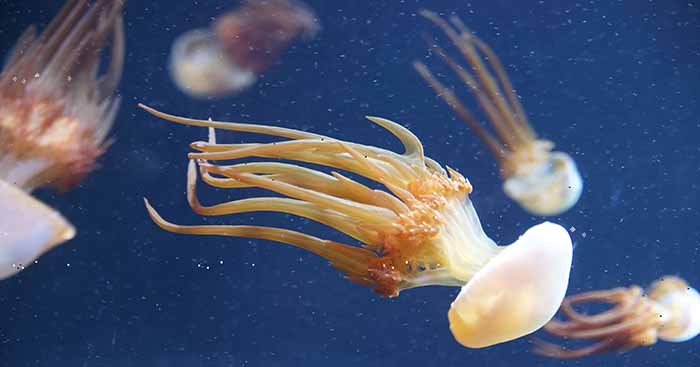
November 3rd is World Jellyfish Day, so we wondered: Aside from the stinging nuisances, do jellyfish benefit humans in any way? The answer is yes! Several jellyfish species are edible and have been eaten in Asian cuisines, particularly in China, Japan, and Southeast Asia, for more than a thousand years. Jellyfish have been around for more than 500 million years, predating dinosaurs and even trees. They have no brain, no heart, no blood, and no bones, yet they’ve survived and thrived all this time. Some species are bioluminescent and create beautiful light shows in the water, while others, like the immortal jellyfish (Turritopsis dohrnii), can actually reverse their aging process and potentially live forever. And some species make nutritious meals. The most common edible species are certain types of Rhopilema (photo #3). They’re cleaned, salted, and dried, which gives them a crunchy, slightly chewy texture. You might find them in cold salads or as accompaniments to other dishes. The taste is quite mild; they’re more about texture than flavor, and they readily absorb seasonings like sesame oil, soy sauce, or vinegar. They’re also low in calories and contain some protein and minerals. Not that you’re running out to catch one, but it’s worth noting that only certain species are safe to eat, and they require proper preparation. > Here’s more about edible jellyfish. Other uses: |
|
|
|
ARE THEY FISH? Not in the least! Jellyfish belong to the phylum Cnidaria (ny-DARE-ee-uh), and are called cnidarians. This group also includes sea anemones, corals, and hydras. They’re invertebrates—without backbones—and are most distantly related to fish. They’re more closely related to corals. The name “jellyfish” stuck long ago because of their gelatinous appearance and the fact that they live in the ocean. It’s one of those quirks of common names that can be misleading. In fact, some people prefer to call them jellies or sea jellies to avoid this confusion. Along these lines, starfish aren’t fish either; they’re echinoderms), which is why you’ll increasingly see them called “sea stars” instead. Echinoderms are a fascinating group! The name means “spiny skin” in Greek, and they’re all marine animals with some really distinctive features. Here are the main types: Other echinoderms include brittle stars, feather stars, sand dollars, sea cucumbers, sea lilies, and sea urchins. Jellyfish are a sustainable, nutritious, and oyster-like (in flavor) food for the Western world. They could help ease the burden of over-exploited fisheries, according to EU-backed research. We’d be happy to take a bite! Don’t wrinkle your nose; think of other foods Westerners never ate, but have become or are becoming mainstream. CHECK OUT WHAT’S HAPPENING ON OUR HOME PAGE, THENIBBLE.COM. |
||