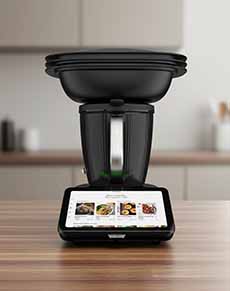
Thermomix 7, AKA TM7, Is Next Big Thing In Cooking At Home
|
|
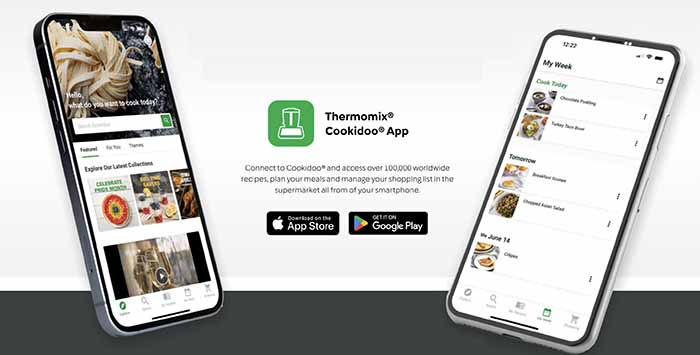
Let’s address the elephant in the kitchen: $1,699 is a lot of money for an appliance. But if you have the money, Thermomix 7 is an amazing piece of technology that can transform how you cook, and bring excitement to the variety and complexity of meals you put on the table. If you’re already a super-cook with all the skills, equipment, know-how, and time to turn out dazzling meals, Thermomix may not be the must-have for you (although if anyone gifts you one, you’ll love cooking with it). Rather, it’s for someone who wants to turn out impressive meals but needs some help with any or every aspect, from deciding what to cook to a step-by-step interactive guide to making the recipes. In sum: It did not disappoint. The Thermomix 7 (TM7 for short) isn’t just an appliance; it’s essentially 20+ kitchen tools consolidated into one smart device. It weighs, chops, blends, cooks, steams, kneads, emulsifies, and more—all guided by a large touchscreen that includes thousands of recipes you can easily tailor to your preferences*. The website notes 100,000 recipes in the Cookidoo app, so whatever your eating preferences, there is likely a lifetime of choices. Think of TM7 as replacing your food processor, blender, mixer, steamer, slow cooker, sous vide machine, and kitchen scale, while serving as a cooking coach. It is not an oven. You still need one of those for baking and roasting‡. Here’s where TM7 earns its keep. The guided cooking feature walks you through recipes step-by-step, adjusting temperatures and times automatically. You’re not juggling multiple pots, timers, and recipes (whether analog or digital). For busy people, this isn’t just convenience—it’s the difference between cooking an exciting meal versus something humdrum (or worse**, takeout). The prep work alone saves hours weekly. Chopping onions in 4 seconds? Kneading bread dough while you help with homework? The Thermomix handles the tedious parts while you focus on everything else demanding your attention. Plus, the app lets you do your planning wherever you happen to be (photo #7). Consider this calculation: If the TM7 helps you cook at home just three extra times per week instead of ordering delivery or dining out, you’re saving at least $60-$90† weekly. That’s $3,120-4,680 annually: The device pays for itself in 5-7 months—and lasts for years. Add in the reduction in food waste (precise portions, less guesswork), the elimination of needing other appliances, and the health benefits of home cooking, and the financial picture shifts considerably. The all-plastic construction is admittedly surprising at this price point. However, plastic has become the way of the world…and this isn’t just any plastic. The bowl and components are made from high-quality, food-safe materials designed for durability and easy cleaning. And the real investment isn’t in the housing material, it’s in the precision technology inside. There’s the heating element that maintains exact temperatures, the powerful yet largely quiet*** motor, the integrated scale accurate to the gram, and the software that receives regular updates with new recipes and features. The recipes are very interesting and expanded what we would normally make as an “everyday” recipe. The first week alone, our choices ranged from ratatouille and lemon souffle and the dinner shown in photos #4, #5, and #6. TM7 makes sense if you: Is Thermomix for you? |
|
 [7] Use the app to plan meals wherever and whenever. ABOUT VORWERK Vorwerk, the creator of Thermomix, is a family-owned company founded in 1883 and headquartered in Wuppertal, Germany. It is a trusted manufacturer in the premium kitchen appliance market and a substantial international business, with a reported revenue of €3.2 billion in 2024 more than 9,300 employees. The original Thermomix, launched in 1971, is the company’s most popular product, and is sold worldwide. ________________ *The integrated online platform and app, Cookidoo®, is what provides thousands of recipes and the step-by-step instructions that seamlessly guide you through the entire cooking process—automatically adjusting the cook time, temperature, and speed for each step (we loved this!). You can save recipes, organize meal schedules, even order groceries. You receive a complimentary three-month all-access subscription to Cookidoo; then the fee is $65/year. The TM7 can perform its cooking functions without Cookidoo, but subscribing enhances your experience with access to a wide range of recipes, meal planning, and renowned guided cooking functionality. **For us, regular takeout has a downside: We’ll order things that are less good for us than the quick home meal of throwing chicken and veggies in the air fryer. Restaurant and takeout foods tend to be higher in calories, sodium, saturated fat, and added sugars compared to home-cooked meals. Restaurants often use more oil, butter, and salt to make food taste good, and portion sizes are typically larger than what you’d serve yourself at home. Many takeout options are also lower in vegetables and fiber. If you’re eating takeout multiple times per week, these factors can add up and potentially contribute over time to—need we say it—weight gain, high blood pressure, and other health issues. And, it costs more and can dump a lot of packaging into the landfill. Yes, we appreciate the benefits of takeout: a big savings in time and energy. We appreciate the convenience of ordering in sushi or tandoori chicken when we don’t want to go out. For people who just don’t enjoy cooking: We understand, but how about trying a meal kit service, like Blue Apron, HelloFresh, Sunbasket, and a host of others? They deliver boxes with pre-portioned ingredients and recipe cards so you can cook meals at home without having to plan menus or shop for groceries. **The motor is pretty quiet at low and medium speeds. †This is a guesstimate, depending on what kind of food you order, for how many people, and how to factor in the cost of whatever ingredients you would have used to cook a meal at home. But no matter what your personal equation is, you can see that you’ll be saving money. ‡The terms “baking” and “roasting” are often used interchangeably, and both terms work fine in casual conversation. In practice, both techniques use dry heat in an oven, but there are distinctions. The temperature distinction is probably the most reliable guideline. If you’re cooking something at 425°F to get it nicely browned and crispy, you’re probably roasting. If you’re cooking at 350°F and concerned about even heat distribution for something to rise or set properly, you’re probably baking. Roasting typically refers to cooking at higher temperatures (usually 400°F and above) and is traditionally associated with cooking whole foods or larger pieces: roasted chicken, roasted vegetables, roast beef, etc. The goal is often to develop a browned, caramelized exterior while keeping the interior moist. Roasting is usually done uncovered to promote browning and crisping. Baking generally refers to cooking at moderate temperatures for foods that start with a batter or dough that needs to set and rise: like bread, cakes, casseroles, cookies, pastries and pies. The process transforms the structure of the food as it cooks. CHECK OUT WHAT’S HAPPENING ON OUR HOME PAGE, THENIBBLE.COM. |
||