TIP OF THE DAY: Riesling, The Best Wine For Sushi
|
This week we attended a trade event called Riesling & Co. World Tour 2011, sponsored by GermanWineUSA.com, a trade association that aims to heighten awareness of the quality and special nature of German wines. A revelation: the best wine for sushi may be Riesling.
At most wine tastings, there’s a selection of cheeses, breads, and other foods to go with the wine. At this Riesling tasting, the only food served was sushi—plus dumplings and spring rolls targeted at those who don’t eat sushi. It was a perfect pairing. Those who don’t drink beer or saké have a winner in a Riesling, part of a quintet of other white wines that includes crisp, high-acid Riesling and Pinot Blanc, spicy and aromatic Gewürztraminer and Viognier. Champagne and other sparklers go well, too. Riesling, Gewürztraminer, and Pinot Blanc are grown in both the Alsace region of France and in Germany. Viognier is largely Alsatian, but Germany has been amping up its production. All four varieties are grown in California, where they are known as “the Rhone clones.” |
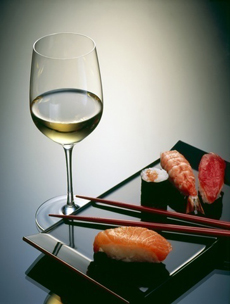 Riesling is the wine to pair with sushi. Photo by Lognetic | Dreamstime. |
|
|
While wines from the same grape variety taste different based on where they were grown, each region produces delicious wines. It’s a question of finding which producers you prefer. THE NEW RIESLING Rieslings have changed substantially over the last 20 years. In an effort to gain more fans worldwide, vintners have moved away from the traditional style of Riesling with its notes of petrol and flowery, sometimes heady aromas. Today, the wines are made to be food-friendly across a rainbow of cuisines. The crispness and acidity are just right for sushi. Riesling is vinified into six categories, in order of increasing sugar levels based on the ripeness of the grapes when picked. Don’t let the word “sugar” scare you away: The slight sweetness in Kabinett and Spätlase wines goes very well with sushi. Kabinett Rieslings, with the lowest sugar levels, are the best place to start. Our favorite producers: Dr. Loosen, Müller Cattoir and Weingut Robert Weil. But you can start your Riesling voyage with any German—or California—Riesling. Now for the bad news: Just try to find Riesling (or a Pinot Blanc, Gewürtztraminer or Viognier) at a Japanese restaurant. You may have to do some lobbying with management. At a minimum, ask if you can bring your own wine for a corkage fee, a charge by the restaurant for every bottle of wine or spirits served that was not bought on the premises. It is usually equal to the price of the most affordable wine that the restaurant carries.
|
||